

Temple Of Hatshepsut at Deir el-Bahari: An architectural masterpiece from the era of the Pharaohs
Introduction:
The Temple of Hatshepsut at Deir el-Bahari stands as one of ancient Egypt’s most awe-inspiring. Architectural triumphs, a true masterpiece that encapsulates the brilliance of the pharaohs in design and construction. Commissioned by the formidable Queen Hatshepsut during the 18th Dynasty. This grand structure was crafted to symbolize her unparalleled power and enduring legacy, while also commemorating her significant religious, political. And economic accomplishments.
Its striking layout, featuring a majestic facade arranged across three elevated terraces, captivates visitors to this day. Adorned with intricate reliefs narrating trade expeditions and sacred rituals. The temple is not just a monument to its creator but an enduring beacon of Pharaonic civilization. Offering a fascinating glimpse into the artistic grandeur and cultural mysteries of times long past.
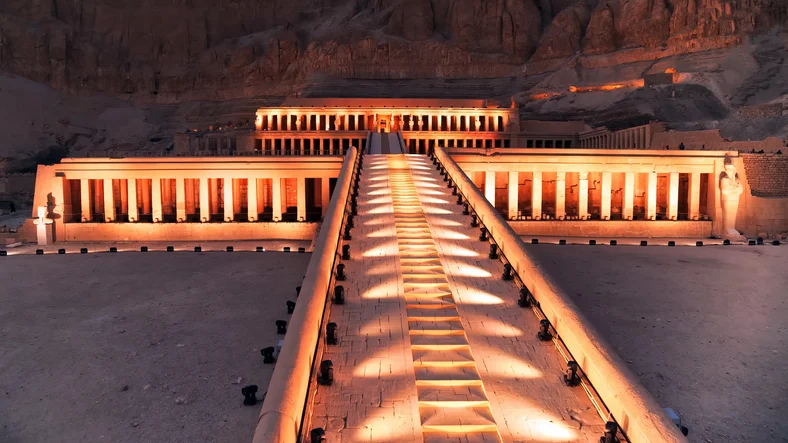
The Temple of Hatshepsut, often referred to as the mortuary temple. Stands in Deir el-Bahari on the west bank of the Nile in Luxor. Queen Hatshepsut commissioned this remarkable structure around 1479 B.C. during Egypt’s 18th Dynasty. Her trusted royal architect, Senenmut, crafted its design. Who also held prominent roles such as “Overseer of Amun’s Estates.”
Its striking layout, featuring a majestic facade arranged across three elevated terraces, captivates visitors to this day. Adorned with intricate reliefs narrating trade expeditions and sacred rituals. The temple is not just a monument to its creator but an enduring beacon of Pharaonic civilization, offering a fascinating glimpse into the artistic grandeur and cultural mysteries of times long past.

Purpose of the Temple
The builders constructed the temple to honor the god Amun-Ra and to commemorate the divine achievements of Queen Hatshepsut. Additionally, it functioned as a site for funerary rites and offerings, underscoring the central role of religion in the everyday lives of ancient Egyptians.
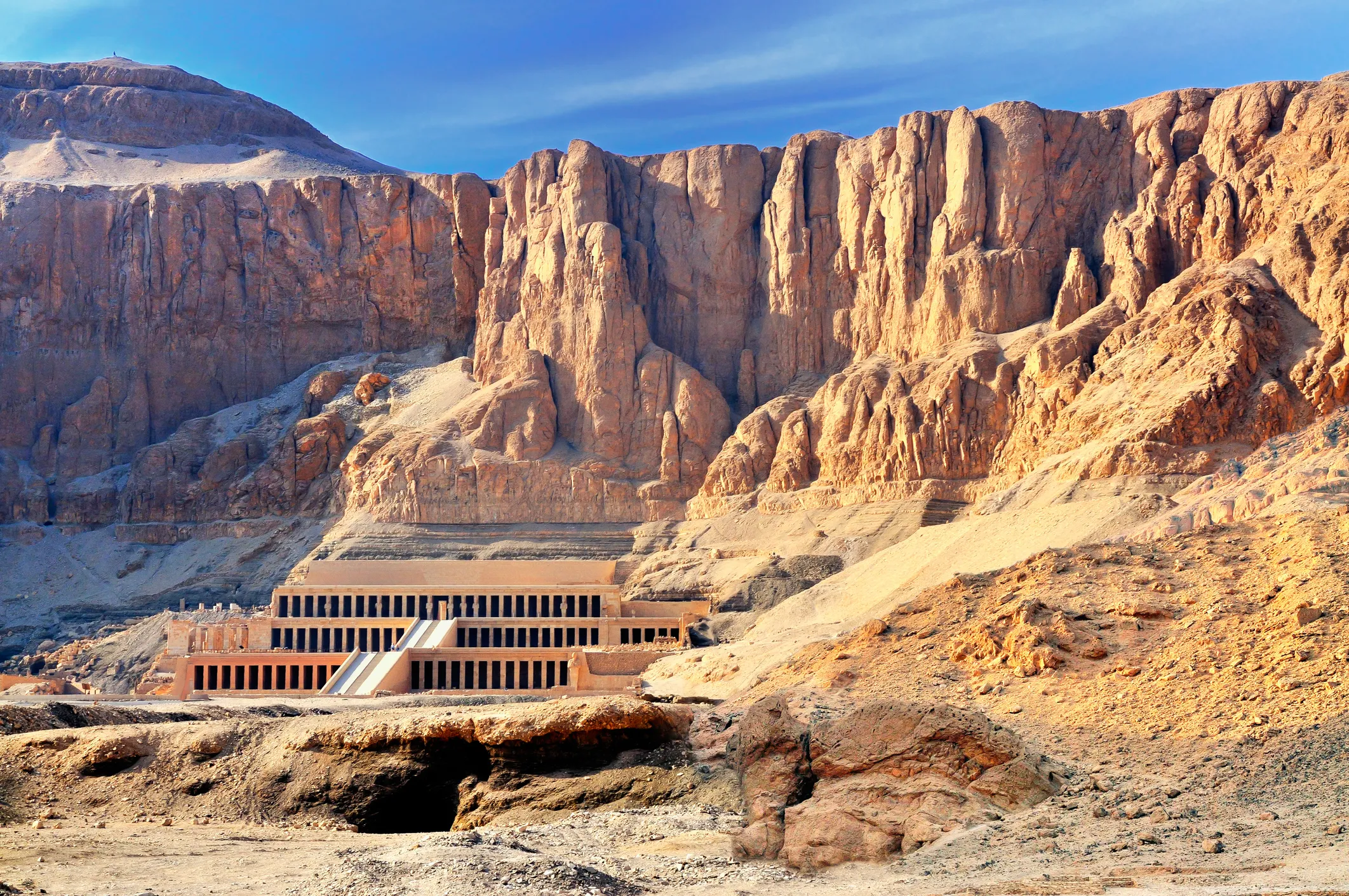
When Was the Temple Of Hatshepsut Built ?
The temple dates back to approximately 1479 B.C., during the reign of Queen Hatshepsut in Egypt’s 18th Dynasty.

Who Initiated Its Construction?
The temple’s construction was ordered by Queen Hatshepsut during her reign in ancient Egypt. Its design was orchestrated by Senenmut, the royal architect renowned as one of the most ingenious engineers of his time.
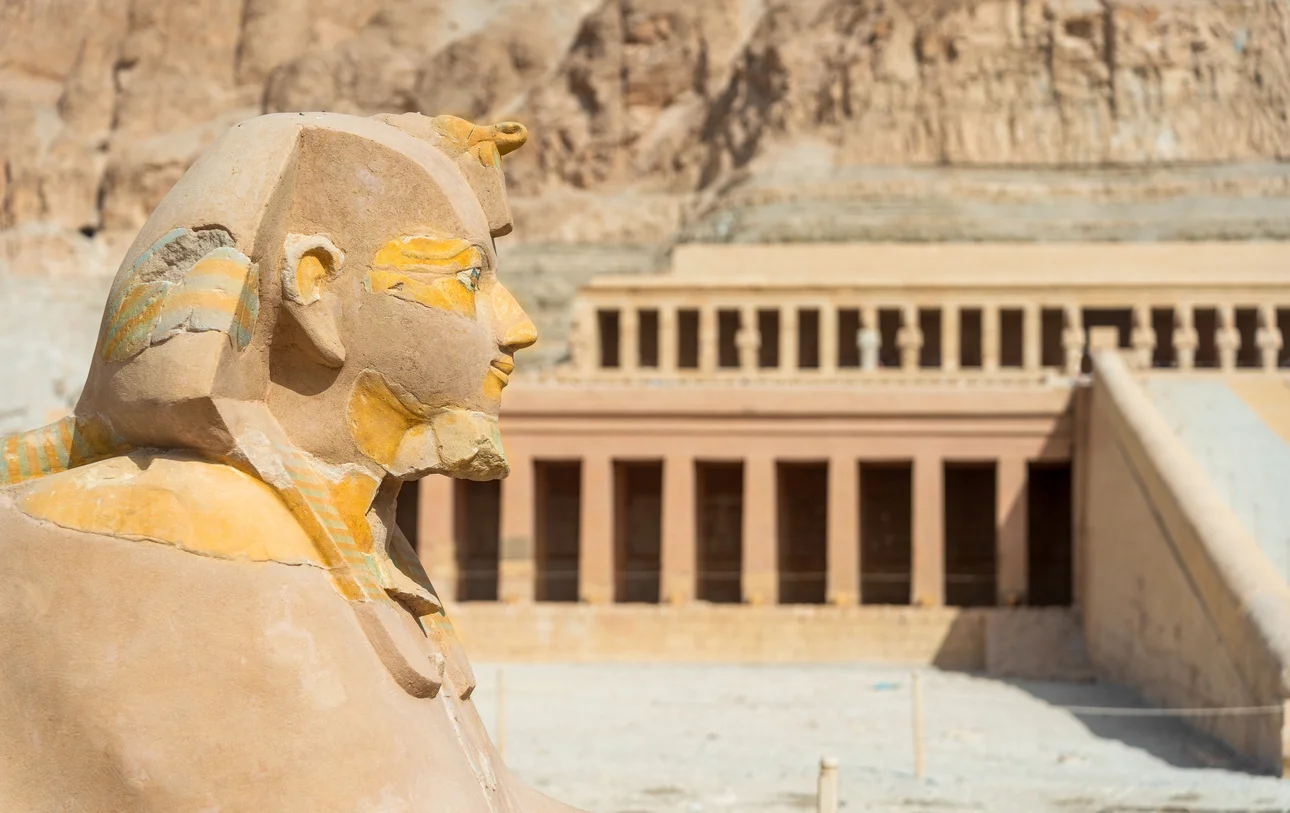
Architectural Plan
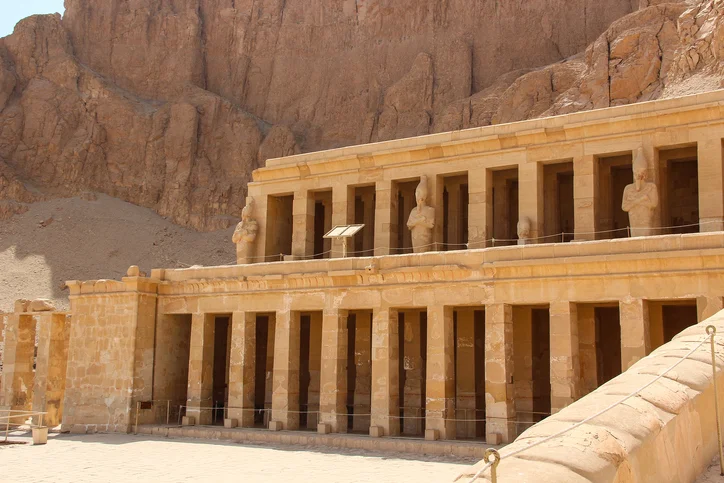
This remarkable temple unfolds across three distinct terraces, seamlessly connected by lush gardens and thoughtfully constructed ramps a groundbreaking architectural approach never before seen in such a form. Hatshepsut’s builders crafted its design to blend harmoniously with the dramatic cliffs nearby, forging a breathtaking connection between natural splendor and human ingenuity. Spearheading this ambitious project was Senenmut, a trusted advisor and key figure within Queen Hatshepsut’s inner circle, whose expertise brought this innovative vision to life.

The Gardens and Pathways
Lush gardens extended gracefully before the temple, adorned with trees that Hatshepsut thoughtfully transported from the distant land of Punt, including rare incense trees. This remarkable endeavor marked a first in history, as no one had ever imported foreign plants to Egypt on such a symbolic scale, making the gardens not only a feast for the senses but also a testament to her visionary leadership.

The Main Works Inside the Temple :
The temple is adorned with an array of sculptures and reliefs that celebrate the accomplishments of Queen Hatshepsut, including:
- The Journey to the Land of Punt: Elaborate reliefs portraying a trade expedition to Punt, where the queen procured incense, myrrh, and valuable woods. These artworks highlight her dedication to fostering commerce and extending Egyptian influence abroad.
- Statues of Osiris and Hatshepsut: Majestic statues honoring the god Osiris and Queen Hatshepsut, symbolizing the reverence shown toward both divine entities and royal figures.
- Chapels of Hatshepsut and Thutmose I: Two consecrated spaces dedicated to the worship of the queen and her father, underscoring the significance of the royal cult during that era.
Hatshepsut’s Expedition to the Land of Punt: The First Illustrated Record of Maritime Trade in History
One of the temple’s most remarkable features is the series of reliefs that commemorate Hatshepsut’s . Celebrated expedition to the land of Punt. This journey went far beyond mere trade. it was a grand political and religious endeavor designed to extend. Egypt’s influence and reinforce the queen’s authority.
Hatshepsut aimed to secure rare and coveted resources for Egypt, including incense, myrrh, ebony, ivory. Gold, and exotic goods like leopard skins and monkeys. These treasures held significant importance, especially in the rituals dedicated to Amun-Ra at his temple. The voyage was not only a commercial enterprise but also a strategic move to strengthen her position on both religious and political fronts.
Numerous fleets set sail through the Red Sea, departing from the Qift Port and traversing the Wadi. Hammamat to access the coastal seaports. The expedition assembled a diverse group, including sailors. Soldiers, scribes, and senior officials, supported by extensive logistical arrangements to guarantee the success of this arduous voyage.
Scenes Depicted On The Temple Walls:
Welcoming The King of Punt
A Warm Welcome in Punt Among the most intriguing scenes is the heartfelt reception that awaited the Egyptian expedition in the Land of Punt. Here, King Parahu and his wife, Iti noted for her distinctive portrayal with a rounded physique and prominent belly extend their warm hospitality. This artwork stands out for its realism, providing a rare example of naturalism in Egyptian art and giving us an intimate look at the people of Punt.

Treasures of Punt Ancient Earth’s Riches
The reliefs vividly illustrate the wealth brought back from this legendary voyage. They carefully transported incense in specialized containers, along with live incense trees, ebony wood, ivory, and dazzling gold.The exotic nature of Punt is evident from the depiction of monkeys and other rare goods gathered during the expedition. It paints a picture of a land teeming with prosperity.

The upper reaches of the wall show the transport of Punt products such as incense tree trunks, ebony wood, ivory, and rare plants, along with animals and fish from the Red Sea, in scenes crowded with life and symbols.

Perhaps the most extraordinary legacy of this journey lies in Hatshepsut’s decision to plant incense trees in the gardens of her temple at Deir el-Bahari. nThese trees weren’t just a triumph of agricultural integration but carried profound symbolism. They represented the direct connection between the fruits of this expedition, the honor of the gods, and the sacred rituals of Egypt melding distant lands into the spiritual heart of the nation.
The Majestic Statues of Osiris and Hatshepsut at the Temple of Deir el-Bahari
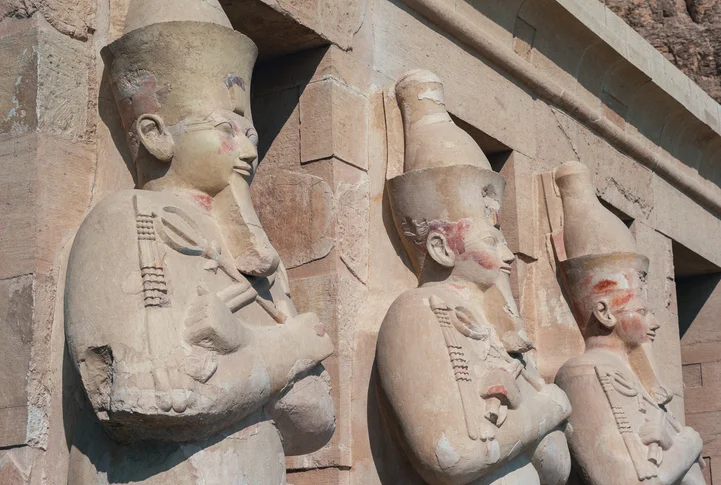
Tucked within the architectural brilliance of the upper terrace of Deir el-Bahari lies an awe-inspiring array. Of monumental statues of Queen Hatshepsut, intricately crafted to embody the god Osiris. These figures, positioned in rows. Stand as testament to the queen’s profound ability to merge divine symbolism with royal stature, depicted either upright or seated in dignified poses.
Most strikingly, these statues portray Hatshepsut with arms ceremoniously crossed over her chest, firmly. Clutching the iconic heqa scepter and nekhakha flail powerful emblems representing both royal authority and Osirian sanctity. This masterful alignment of mythology and monarchy speaks volumes about her. Desire to elevate her reign through both earthly and celestial connections.

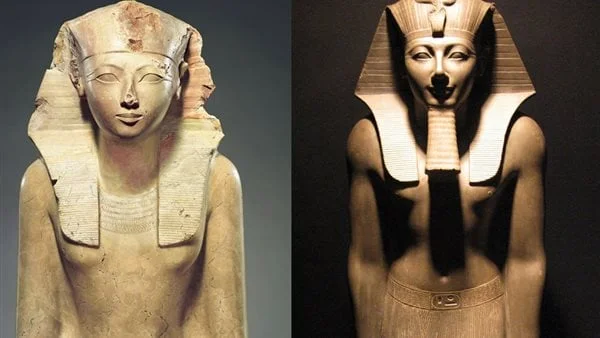
In various renditions, Hatshepsut’s statues intriguingly shift between gendered characteristics. Some celebrate her femininity through soft, distinctly female features, while others emphasize her pharaonic. Might with more masculine attributes, such as the symbolic false beard. This deliberate blending underscores her dual identity not only as a woman but also as a supreme ruler. A strategic choice that cemented her position in history as both a trailblazing queen and a formidable pharaoh.
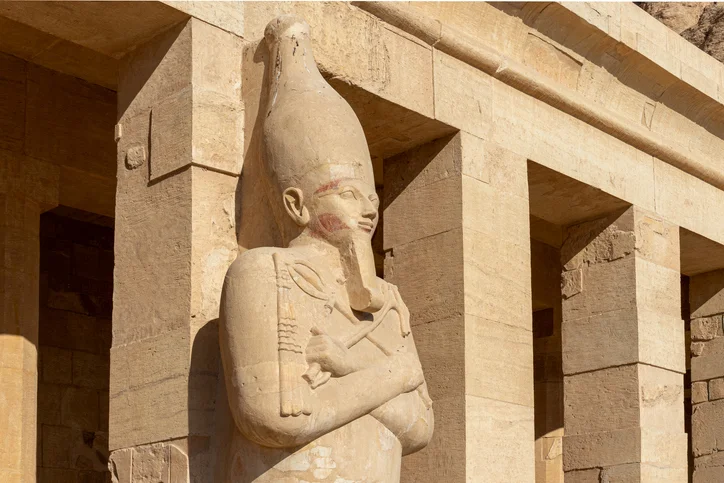
In various renditions, Hatshepsut’s statues intriguingly shift between gendered characteristics. Some celebrate her femininity through soft, distinctly female features, while others emphasize her pharaonic might with more masculine attributes, such as the symbolic false beard. This deliberate blending underscores her dual identity not only as a woman but also as a supreme ruler a strategic choice that cemented her position in history as both a trailblazing queen and a formidable pharaoh.


Why Did Hatshepsut Choose the Form of Osiris ?
Osiris as a Representation of Resurrection and Eternity
In ancient Egyptian thought, Osiris embodied the cycle of death and rebirth, serving as the deity overseeing the afterlife. Pharaohs commonly aligned themselves with Osiris posthumously to secure their immortality and eternal legacy. By choosing to depict herself as Osiris, Hatshepsut made a profound statement: (“I am an immortal pharaoh like Osiris, and my eternal destiny is assured.” ) .

The Political Legitimacy of the “Female” Pharaoh
Hatshepsut was a female pharaoh An extremely rare situation in the history of Egypt.
- She therefore chose to represent herself not only as an ordinary pharaoh, but as a specific deity: Osiris.
- This choice gave her stronger religious authority and conveyed to both the people and the priests the message that she was not merely a “queen,” but a goddess in the guise of a king.
Osiris, Emblem of Justice and Order
The story of Osiris is widely recognized betrayed and murdered by his brother Seth, only for his son Horus to ultimately defeat Seth and reclaim the throne. Through this narrative, Osiris came to symbolize justice and the triumph over chaos. Hatshepsut sought to align herself with these ideals, aiming to reinforce her image as the rightful ruler and protector of divine order against any disruption or disorder.

The Sanctuary of Hatshepsut and Thutmose I
Situated on the second tier of Hatshepsut’s mortuary temple at Deir el-Bahari, also known as Djeser. Djeseru, which translates to “the most sacred of sanctuaries.
This sanctuary was devoted to the royal cult and held significance as one of the holiest areas within the. Temple complex.
Why Do His Name and Image Appear in Hatshepsut’s Temple ?
The presence of Thutmose I’s name and image in Hatshepsut’s temple reflects her deliberate effort to. Solidify her legitimacy as pharaoh. By emphasizing the connection to her biological father, Thutmose I. She reinforced her rightful claim to the throne, portraying herself as the legitimate heir to the royal lineage. This strategy was particularly significant given the unusual circumstances of her reign as a female pharaoh. Hatshepsut’s reliance on both dynastic and religious symbolism helped fortify her position within a traditionally male dominated role.
The temple’s artistic Featuring depictions of divine birth, voyages to Punt, and ritual offering. Scenesfurther served to underline her ties to the gods and her place within the continuity of Egypt’s royal line.
Where Does Thutmose I Appear Inside the Temple (Locations and Representations) ?
Thutmose I is prominently featured in various locations within the temple’s mortuary complex, which includes spaces dedicated to the royal cult. In the southern section of the funerary court, there lies a cultic ensemble with two distinct offering halls:
a Smaller northern hall: devoted to Thutmose I and a larger southern hall for Hatshepsut. The hall of Thutmose I, despite its modest size compared to Hatshepsut’s, is adorned with striking elements such as red granite false doors, ritual scenes, and sacrificial depictions.
In the central sanctuary of Amun, shared imagery showcases both Hatshepsut and Thutmose I making offerings to Amun, along with artwork that underscores their familial connections and rituals linking Thutmose I to the divine realm. This sanctuary further emphasizes the royal cult’s legacy with its Osirian statues and six statues of Amun housed in wall niches, illustrating the seamless continuity between the king’s divine role and the temple’s spiritual purpose.
What Do the Reliefs Reveal
The Offering Rituals: The reliefs prominently showcase Hatshepsut and Thutmose I standing before. Offering tables, surrounded by priests and individuals presenting sacrifices. These artistic renditions embody more than ceremonial practices; they reaffirm the enduring legacy of the royal cult while. highlighting Hatshepsut’s divine authority to perform royal duties and receive blessings from the gods.
Echoes of Antiquity: In a nod to history, some scenes within the offering halls and chapels were intentionally designed to replicate reliefs from the Old Kingdom, such as those found in Pepi’s pyramids. This deliberate mirroring establishes a connection to ancient traditions, reinforcing a sense of historical legitimacy for the rulers depicted.
A Portrait of Authority: Thutmose I is often depicted in reliefs and statues as the quintessential king. Adorned with classic symbols of royalty. These images position him as a revered ancestral figure, embodying strength and authority. Many of these artifacts. Preserved originally in their historical context now reside in Western museums, transferred during periods of excavation and documentation efforts, ensuring their stories continue to be told worldwide.
What Message Was Hatshepsut Sending Through Her Staging with Thutmose I?
- Hatshepsut’s meticulous portrayal alongside her predecessor, Thutmose I, was a masterful act of political symbolism. Designed to communicate several crucial themes.
- The Unquestionable Legitimacy of Her Rule: As the biological daughter of the royal lineage. Hatshepsut emphasized her rightful claim to the throne. Her legitimacy wasn’t grafted on it was deeply rooted in her heritage.
- A Bridge to Tradition, Not a Break: By associating herself with the legacy of Thutmose I and. Embracing pharaonic norms from earlier dynasties. She underscored that her reign represented continuity within Egypt’s age-old traditions, not a disruption of them.
The Burials in the Temple
Though the majestic temple stands as a testament to ancient rituals and royal reverence, no mummy of royal lineage has ever been discovered within its sacred walls. The temple’s primary purpose was not as a burial ground but as a site for worship and elaborate funerary ceremonies.
Many historians theorize that Queen Hatshepsut herself was laid to rest in the Valley of the Kings, in the tomb identified as KV20. This location aligns more closely with the traditions of interring rulers in grandeur befitting their legacy.
Rare Facts About the Temple:
- A Cosmic Marvel: One of the most mesmerizing traits of this ancient temple is its connection to the heavens. Every year on December 21, a single ray of sunlight strikes the temple’s facade with impeccable precision. This awe-inspiring phenomenon is a testament to the advanced astronomical understanding of the ancient Egyptians, who meticulously aligned their structures to celestial events.
- A Testament to Preservation: While time has certainly left its mark on the temple, its story took a significant turn in 1961 when an Egyptian-Dutch archaeological effort undertook meticulous restoration work. This international collaboration brought new life to a monument that had endured centuries of wear, allowing today’s visitors to appreciate its historical grandeur.
- Where Worship and Wonder Merge: Nestled in the serene valley of Deir el-Bahari, this temple holds an extraordinary significance. Dedicated to both Hathor, the goddess of love and music, and Amun-Ra, the king of gods, it serves as a vibrant reminder of the spiritual diversity and rich religious fabric that shaped ancient Egyptian society.

Exploring the Legacy of Queen Hatshepsut :
Born around 1508 B.C., Queen Hatshepsut emerged as one of ancient Egypt’s most remarkable figures. As the eldest daughter of King Thutmose I and Queen Ahmose, she carved her place in history by becoming one of the first women to ascend the Egyptian throne a milestone that solidified her legacy as a trailblazer for female leadership in a predominantly male dominated era.
Her reign, which lasted an impressive 22 years, unfolded as a golden era of peace, economic growth, and monumental achievements. Through her visionary leadership, Queen Hatshepsut spearheaded ambitious construction projects that left a lasting imprint on Egypt’s landscape. Among her most iconic accomplishments was organizing trade expeditions to the flourishing land of Punt, which not only bolstered the economy but also showcased her determination to secure Egypt’s prosperity through innovation and diplomacy.
Hatshepsut’s story is more than just chronicles of governance. She stands as an enduring symbol of female influence and authority in an ancient world where such roles were rare. Her life and reign continue to inspire generations, reminding us of the strength and potential of women who lead with wisdom and courage.


Conclusion:
The Temple of Hatshepsut stands as far more than an ancient architectural masterpiece. It embodies a powerful testament to the significance of women in ancient Egyptian society. Showcasing their influence in governance and monumental achievements. Its beautifully adorned walls, brimming with intricate reliefs and vibrant paintings. Narrate the remarkable story of a queen who led her kingdom through an era of peace and prosperity.
Even after thousands of years, this awe-inspiring temple remains an enduring symbol of majesty at Deir el-Bahari. Drawing millions of visitors from around the globe. It continues to unveil fragments of the enigmatic. Egyptian civilization an endless source of wonder and fascination for humanity.

Temple of Hatshepsut
The Temple of Hatshepsut at Deir el-Bahari – A Monument of Divine Kingship, Female Power, and Architectural Harmony
What is the Temple of Hatshepsut?
The Temple of Hatshepsut, known as Temple of Hatshepsut (“The Holy of Holies”), is a breathtaking mortuary temple carved into the cliffs of Deir el-Bahari on the west bank of the Nile in Luxor.
Built during the 18th Dynasty (c. 1479 BC) by Queen Hatshepsut—Egypt’s most powerful female pharaoh—it was designed by her brilliant architect, Senenmut. This temple is a masterpiece of symmetry, innovation, and spiritual symbolism, blending seamlessly with the natural landscape.

Why was the temple built?
The temple served three sacred purposes:
- To honor Amun-Ra, the king of gods, and secure divine favor.
- To perform funerary rites for Hatshepsut’s ka (soul) and ensure her immortality.
- To commemorate her reign, especially her legendary expedition to Punt.
It was a political and spiritual statement: a woman ruled as a true pharaoh, chosen by the gods.
How did it reinforce her authority?
Hatshepsut used the temple to:
- Depict her divine birth from Amun, proving her right to rule.
- Link herself to her father, Thutmose I, to strengthen lineage.
- Show her as a male pharaoh in statues, wearing the double crown and false beard.
Every relief was a message: “I am not a queen—I am a god-king.”
What makes its design revolutionary?
Designed by Senenmut, the temple broke tradition with its:
- Three grand terraces rising toward the cliffs.
- Colonnaded porticoes with open and closed bud columns.
- Perfect symmetry and integration with the Theban mountains.
- Ramps instead of stairs, symbolizing a sacred ascent.
It was not imposed on nature—it was born from it.
What role did the gardens play?
Before the temple stood lush gardens with incense trees brought from Punt—
- These were the first foreign trees ever imported to Egypt.
- They symbolized Hatshepsut’s power to bring the divine (incense) into Egypt.
- They were used in rituals for Amun, linking trade to religion.
A living legacy of her greatest expedition.
What was the Punt expedition?
One of the most detailed reliefs in Egyptian history shows Hatshepsut’s fleet sailing to Punt (likely modern Eritrea/Somalia) to bring back:
- Incense and myrrh (for temples)
- Live incense trees
- Gold, ivory, ebony, leopard skins, monkeys
This was not just trade—it was a divine mission to supply Amun’s temple.
Who were the people of Punt?
The Puntites were led by King Parahu and his wife Iti, depicted with remarkable realism:
- Iti has a curved back and prominent belly—rare in idealized Egyptian art.
- They lived in round huts on stilts.
- The scene shows cultural exchange, not conquest.
This is one of the earliest records of peaceful international diplomacy.
Why is Hatshepsut shown as Osiris?
In the upper colonnade, Hatshepsut appears as Osiris, god of resurrection:
- Arms crossed over chest
- Holding the heka scepter and nekhakha flail
- Wearing the white crown of Upper Egypt
This symbolized her eternal kingship and divine resurrection—she was not just a ruler, but an immortal god-king.
Why is her father honored here?
Hatshepsut built a dedicated chapel for her father, Thutmose I, to:
- Prove she was his true heir.
- Align herself with a powerful, respected pharaoh.
- Strengthen her legitimacy in a male-dominated role.
They are shown together making offerings to Amun—father and daughter, king and god-king.
Is Hatshepsut buried in the temple?
No. The temple was not a tomb. She was buried in KV20 in the Valley of the Kings, one of the largest royal tombs.
Her mummy was later found in KV60, identified by a tooth matching a canopic box with her name.
Is there an astronomical alignment?
Yes! On the **winter solstice (December 21st)**, a beam of sunlight strikes the sanctuary of Amun with perfect precision—proof of the Egyptians’ advanced knowledge of astronomy and sacred geometry.
Was it restored?
Yes. After centuries of collapse, an Egyptian-Dutch team restored the temple between 1961–1965, returning it to its original grandeur.
| Feature | Detail |
|---|---|
| Pharaoh | Hatshepsut (18th Dynasty) |
| Location | Deir el-Bahari, West Bank, Luxor |
| Construction | c. 1479 BC |
| Architect | Senenmut |
| Meaning of Name | Temple of Hatshepsut (“The Holy of Holies”) |
| Main Purpose | Mortuary temple for rituals and divine legitimacy |
| Famous Reliefs | Divine Birth, Expedition to Punt, Coronation |
| Deities Honored | Amun-Ra, Hathor, Osiris |
| Unique Feature | First illustrated maritime trade, Osiride statues of a queen |


