

The Grand Egyptian Museum (GEM) — Everything You Need to Know in Detail
Introduction
The Grand Egyptian Museum (GEM) is an ambitious cultural project situated on the Giza Plateau. Approximately 1.2 kilometers northwest of the iconic Giza Pyramids. Designed to be the world’s largest. Museum devoted to a single civilization, it will showcase over 100,000 archaeological artifacts spanning various eras of Egyptian history. The museum aims to serve as an international hub for research, preservation, exhibition, and collaborative efforts among museums worldwide.

Why Was the Museum Built? (Main Objectives)
- To relocate the most valuable artifacts from the historic Cairo Museum in Tahrir Square to a state-of-the-art facility. Ensuring their preservation and better exhibition standards. This includes the renowned treasures of Tutankhamun. Which will be fully displayed together for the first time in a single venue.
- To serve as a regional and global hub for conservation and restoration efforts. Utilizing advanced technologies to safeguard archaeological artifacts. While fostering the development and training of future specialists through initiatives like the GEM Conservation Center. Supported by Japan International Cooperation Agency (JICA).
- To boost cultural tourism in Egypt by offering a modern and immersive experience near the iconic Giza Pyramids. Creating a compelling cultural gateway for visitors.

Who Came Up With the Idea, Who Finances the Project, and When Did the Work Begin?
The concept for a museum with an international focus was introduced as far back as the 1990s, initially envisioned to house some of the most valuable antiquities beyond the scope of the old Cairo Museum. This ambitious idea marked the foundation of what would later evolve into the project.
The architectural design of the museum was crafted by Heneghan Peng, an Irish firm based in Dublin. Which emerged victorious in an international design competition held at the start of the 21st century. Their blueprint prominently highlights seamless integration with the surrounding site and visual harmony with the iconic pyramid plateau.

About The Company Heneghan Peng
Heneghan Peng Architects, also known as HPARC, is an architecture firm founded in 1999 by Róisín Heneghan and Shih-Fu Peng. Initially established in New York, the firm relocated to Dublin in 2001 and has since expanded its presence to Berlin. The company specializes in architecture, landscape. And urban design, and has gained recognition for its innovative projects. Including the Grand Egyptian Museum and the Giant’s Causeway Visitors’ Centre.
The firm has a reputation for winning significant design competitions, often competing against numerous entries. For instance, they triumphed in a design competition for the Grand Egyptian Museum, which had over 1,500 submissions. Despite having a small team at the time. Heneghan Peng Architects is known for its collaborative approach and has worked on various notable projects across different countries, reflecting a commitment to cultural and environmental considerations in their designs

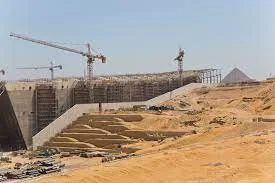
Construction activities officially commenced with preparatory groundwork in the late 2000s. More intensive phases began post-2011, supported by extensive international collaboration, including loans and partnerships such as Japan’s JICA. Significant progress was achieved with key construction milestones completed by early 2023. This paved the way for a phase of partial or experimental opening, as the project awaits its official inauguration.

Museum Layout and Architectural — Striking Design Meets Ingenious Engineering
Covering an expansive area of approximately 500,000 square meters (or 50 hectares), this museum stands. As a breathtaking testament to innovation and cultural heritage. Designed to accommodate thousands of priceless artifacts, the sprawling built-up surface features vast exhibition halls that invite visitors to immerse themselves in history. A standout feature of the architecture is the north facade. Which showcases translucent and semi-translucent alabaster panels carved into intricate triangular motifs approximately 250,000 individual elements meticulously arranged according to plans. By day, these luminous panels offer a modern complement to the surrounding landscape. While by night, they shimmer in harmony with the ancient wonder of the pyramids nearby, creating an awe-inspiring visual connection.
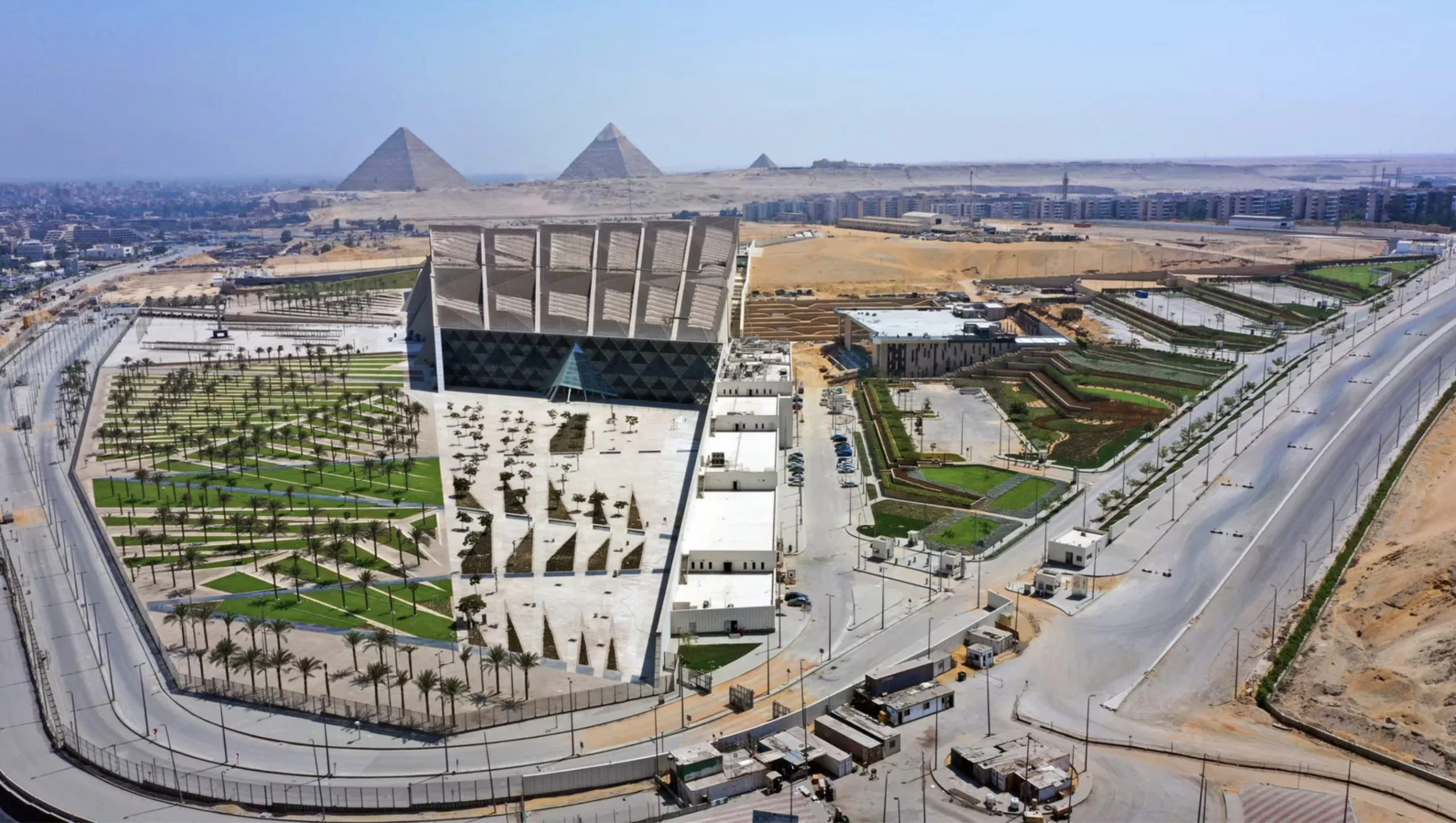
A nod to the past is woven seamlessly into the design’s alignment with history: the museum’s north-south. Axis mirrors the axes of Giza’s iconic pyramids Khufu and Menkaure. This deliberate positioning symbolizes a profound integration with the archaeological grandeur of the region, ensuring that the museum not only preserves history but also becomes a part of it.
Behind this architectural feat are some of the world’s leading structural engineering firms, including Arup and Buro Happold. Tasked with developing cutting. Edge solutions for weight-bearing resistance. Sophisticated environmental management, climate control, and seismic protection, these experts have implemented standards that prioritize sustainability and artifact preservation. Advanced ventilation systems ensure optimal air circulation while maintaining conditions. That safeguard even the most delicate treasures, underscoring the museum’s commitment to conservation and excellence.

Who Financed and Built It? (Financing and Contractors)
The project was financed through a combination of Japanese loans provided by JBIC and JICA, allocations from the Egyptian state budget, and international donations and contributions. The total cost is estimated to be around one billion dollars, although this figure varies depending on the specific phases and sources involved.
The construction was carried out by a consortium, with Orascom Construction from Egypt and BESIX from Belgium leading the execution of the major works.
When Was It Inaugurated / Current Situation?
The museum entered a phased opening period between 2023 and 2024, with select spaces welcoming visitors as part of an experimental rollout. A significant milestone occurred in October 2024, when 12 major halls were unveiled during an operational testing phase. This phase introduced daily visitor limits as part of a controlled trial to fine-tune logistics. As for the full official inauguration, it has seen multiple delays over time. Current plans, as shared through official updates and media outlets, aim for a grand opening in 2025, although specific dates remain subject to change.
The Most Important Collections And Holdings Of The Museum
The museum is believed to contain over 100,000 archaeological artifacts stored within its facilities. A significant portion of these treasures, numbering in the tens of thousands, is planned for exhibition in the permanent galleries. The precise count of items on display fluctuates based on the museum’s operational phase, whether experimental or at full capacity. Current plans aim to showcase approximately 50,000 objects, arranged chronologically by historical periods, while incorporating opportunities for rotating exhibitions to offer a dynamic visitor experience.

The Tutankhamun Collection
For the first time ever, the complete collection of artifacts from Tutankhamun’s tomb will be showcased in a single location. This remarkable display encompasses approximately 5,000 to 5,398 items, historically scattered or stored at the Egyptian Museum in Cairo, where issues with conservation and exhibition were a persistent challenge. The collection will be housed within a specially designed wing of the museum, spanning roughly 7,500 square meters. This ambitious presentation is set to become one of the museum’s standout attractions.
Discovering the Treasures of Tutankhamun
In 1922, British archaeologist Howard Carter uncovered an astonishing treasure trove in the Valley of the Kings (Luxor) that would go down in history as one of the 20th century’s most remarkable archaeological finds. The tomb of Tutankhamun also known as KV62 was almost completely untouched by grave robbers, a rarity that preserved countless artifacts and provided a remarkable glimpse into ancient Egyptian life, death, and spirituality.
Here’s a closer look at the treasures that brought the boy king and his legacy to worldwide fame:
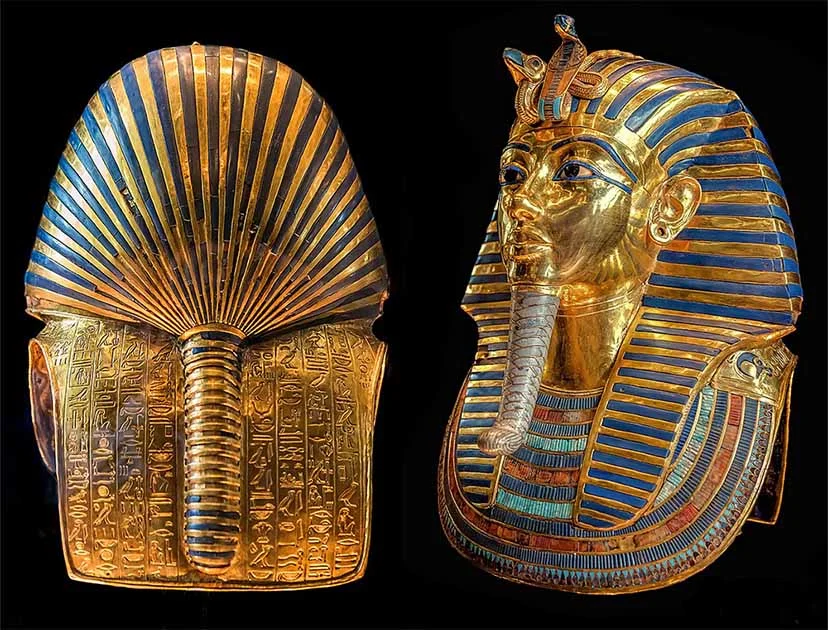
The Funerary Mask of Tutankhamun:
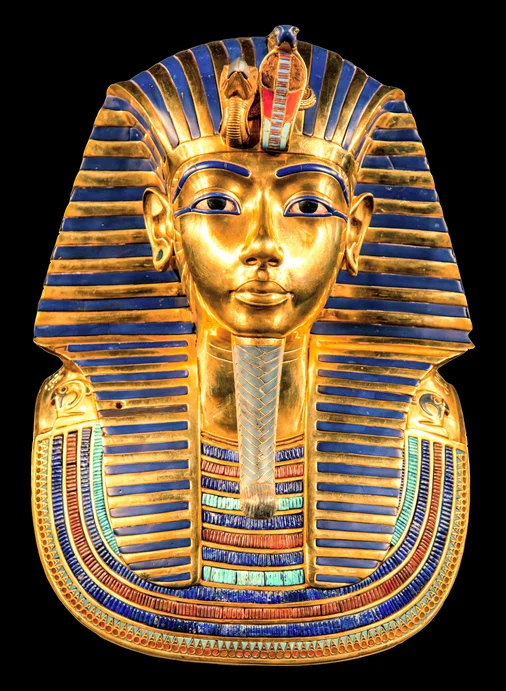
stands as one of the most mesmerizing and significant archaeological treasures ever discovered. It represents not only a masterpiece of ancient artistry but also embodies the profound belief the ancient Egyptians held in the existence of life after death. Constructed predominantly from solid gold—a material deeply associated with eternity and immortality it is further enriched by the inclusion of semi-precious stones such as lapis lazuli, quartz, and obsidian, which lend a sense of regal purity and majesty befitting a king destined for divine immortality in the eyes of his people.
The mask portrays
a youthful ruler with a tranquil and idealized expression. He is adorned with the royal striped nemes headdress, crafted from alternating bands of gold and blue. Prominently displayed on his forehead are the cobra and vulture symbols, representing the goddesses Wadjet and Nekhbet, respectively, signifying the unification of Upper and Lower Egypt under his rule. A wide collar, embellished with vibrantly colored glass and precious stones, rests on his chest, beautifully merging artistic brilliance with spiritual significance. This detail underscores the ancient Egyptian belief that a king must transcend mortal appearances, donning a divine and eternal visage to ascend to the afterlife.
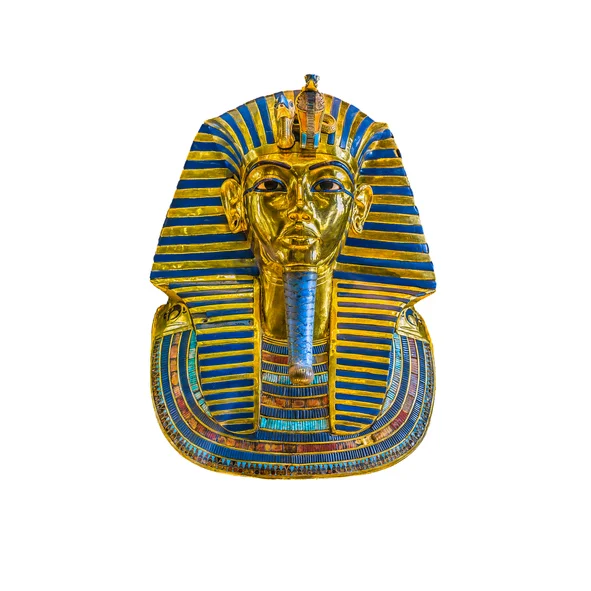
One exceptional feature of the mask demands particular attention: nestled within the collar is a striking scarab-like bead crafted from Libyan Desert Glass, a material formed not by ordinary earthly processes but by the immense heat generated during a meteorite impact in the Libyan Desert approximately 29 million years ago. This cosmic event transformed desert sands into a rare glass imbued with a celestial essence. As a result, the mask is not limited to gold and earthly gemstones; it harbors a piece originating from the heavens, amplifying its mystical and historical significance.
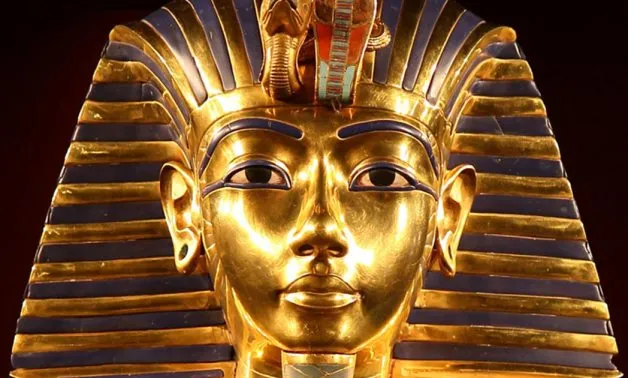
The funerary mask of Tutankhamun transcends its identity as merely the golden visage of a young pharaoh. It serves as an eternal connection between earth and sky, humanity and divinity, history and the cosmic realm. Its enduring presence continues to spotlight the unmatched ingenuity of ancient Egyptian civilization, immortalizing their kings through materials that weave together terrestrial treasures with celestial narratives.

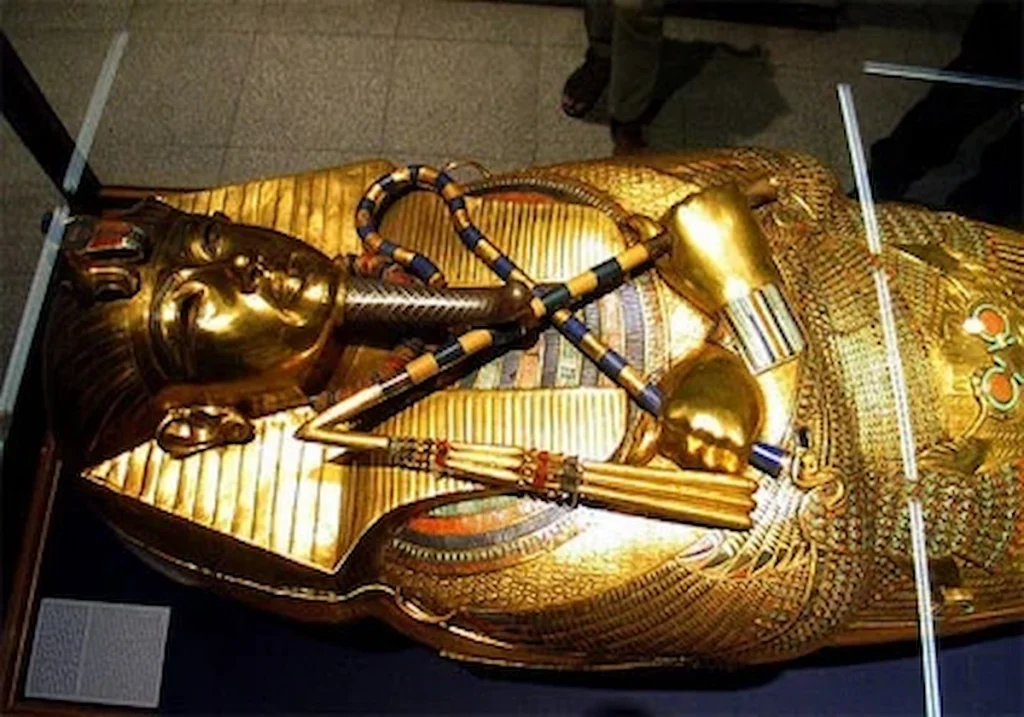
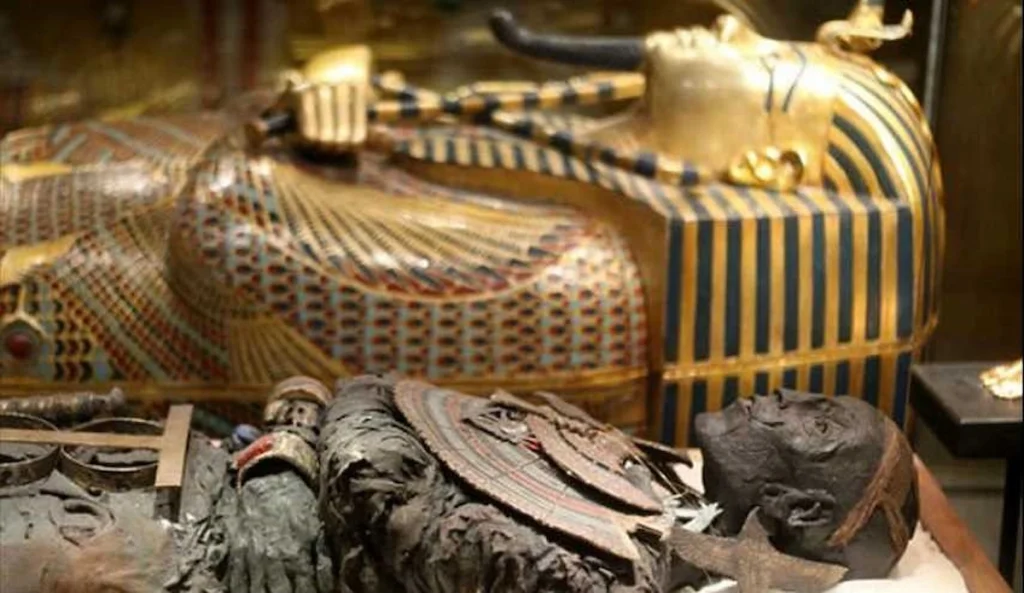
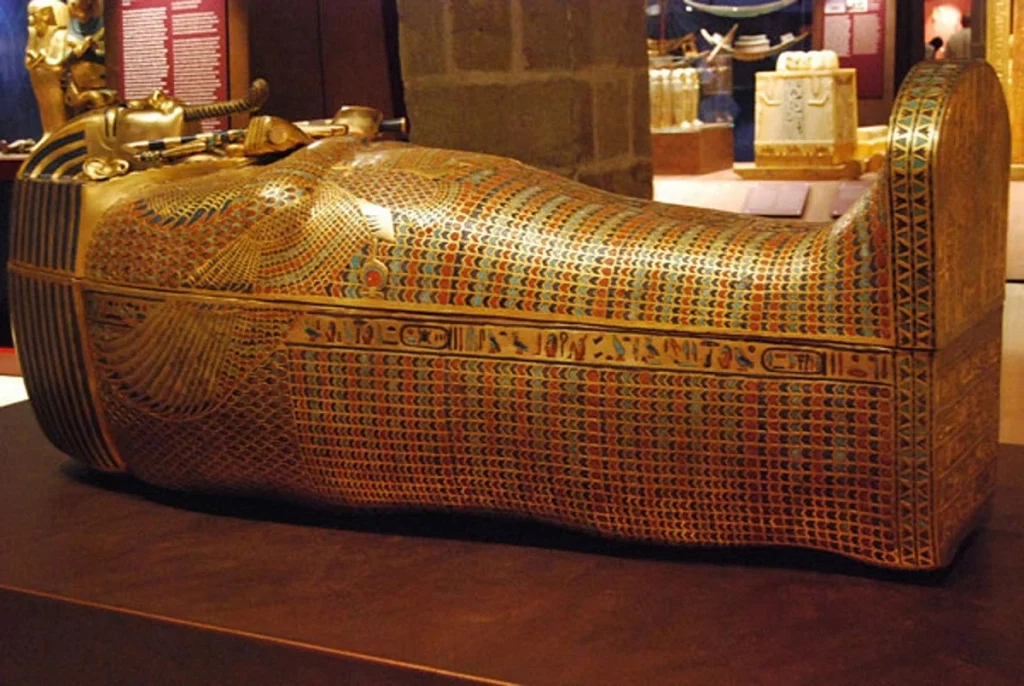
The Three Sarcophagi: the innermost sarcophagus, crafted from solid gold, holds the highest significance.
The outermost sarcophagus was crafted from wood and covered with a delicate layer of gold. Embellished with colorful motifs, serving as the initial protective shield for the royal remains. The next layer, the intermediate sarcophagus, displayed greater sophistication; it was adorned with gold. Semi-precious stones, and colored glass, portraying the king in the likeness of Osiris. Lord of the afterlife and symbol of rebirth and renewal. At the core was the innermost sarcophagus. A marvel of artistry and craftsmanship a coffin fashioned entirely from solid gold, weighing over one hundred kilograms. It featured intricate engravings of the pharaoh holding a scepter and flail, emblems of his eternal authority. This golden coffin became Tutankhamun’s final resting place, embodying the ancient Egyptian vision of immortality alongside his iconic funerary mask.
Gold, revered by the ancient Egyptians as the “flesh of the gods,” played a central role in establishing. Tutankhamun’s divine essence. Encased in this golden sarcophagus and further adorned with a magnificent mask. The young pharaoh was immortalized with a celestial presence. Adding an extraordinary touch to this ensemble is the inclusion of a singular bead embedded in the mask’s collar. Crafted from rare desert glass formed by the impact of an ancient meteorite. This remarkable detail unites terrestrial gold with a fragment from the heavens, creating a masterpiece that transcends time. The tomb of Tutankhamun, with its exquisite mask and layered sarcophagi, stands as a testament to ancient Egyptian beliefs An eternal epic intertwining art, spirituality, and cosmic wonder. Affirming their conviction that death marked not an end but the beginning of an everlasting journey into eternity.


The War Chariots: more than six examples of remarkable craftsmanship.
Among the extraordinary treasures discovered in Tutankhamun’s tomb stand the war chariots, numbering more than six complete examples, crafted with astonishing skill that combined artistic ingenuity with practical functionality. The structures of these chariots were made of lightweight yet sturdy wood, decorated with gold, silver, and semi-precious stones, while the wheels, of refined design, were adapted for speed and maneuverability, both on the battlefield and in ceremonial processions.
Recent studies show that some of these chariots were intended for military activities and hunting, while others were used in official ceremonies and religious rituals. This diversity of functions reflects the king’s role not only as a military leader but also as a religious and political symbol in the life of ancient Egypt.
The presence of more than six chariots in the tomb of a young pharaoh confirms that, for the ancient Egyptians, death was not the end of life but the beginning of a new journey, where the king needed in the afterlife everything he had used in the earthly world from the mask and sarcophagi to the chariots representing his power and glory.


Weapons and Tools: Includes swords and daggers, with one crafted from meteoritic iron.
When exploring the timeless treasures of Tutankhamun’s tomb, one can’t help but be captivated by the tools and weapons that unfold the story of a young king who was not only a ruler but also a defender of his realm. Unearthed among the riches were an assortment of swords, daggers, bows, and arrows, many crafted in gold or adorned with dazzling gemstones. These artifacts were more than instruments of battle they blended raw power with profound symbolism, embodying the essence of strength and sovereignty.
Arguably the most awe-inspiring piece is a small yet mighty dagger featuring a blade forged from meteoritic iron a material sourced from a celestial stone that fell to Earth from outer space. This incredible find highlights the ingenuity of ancient Egyptians, who didn’t just rely on earthly resources but also drew inspiration from the heavens to create items of unparalleled significance.
These weapons transcended their practical function; they were emblems of authority and protectors of legacy. Their presence in Tutankhamun’s burial chamber represented his enduring might, safeguarding him not only in this life but also as he journeyed into eternity. Alongside the iconic golden mask, the eternal sarcophagi, and the elegant war chariots, these weapons complete the intricate tapestry of a fleeting yet monumental life. The brief reign of this young pharaoh remains eternally etched in history, thanks to the stunning mysteries still housed within his tomb.
Heavenly Sword
Among the treasures of the young Pharaoh Tutankhamun’s tomb, a stunning golden dagger was discovered its iron blade is not from Earth but from a meteorite that fell from the sky!
A blade that has not rusted for over 3,300 years, with a golden handle intricately decorated beyond imagination, carrying one of the greatest secrets of ancient Egyptian civilization.
A unique piece that made King Tut the owner of a true “Heavenly Sword.”
Jewelry: countless designs crafted from gold and adorned with precious gems.
The tomb housed an extraordinary trove of jewelry, numbering in the thousands and crafted from gold and precious stones. Among these treasures were necklaces, bracelets, rings, earrings, and belts, all meticulously designed and adorned with lapis lazuli, turquoise, carnelian, and emerald. Their vivid interplay of colors demonstrated refined artistic sensibility and exceptional craftsmanship.
These jewels served a deeper purpose beyond personal adornment; they held religious and protective significance. Some were linked to magical inscriptions that were believed to shield the king during his journey to the afterlife.
This collection highlights the ancient Egyptians’ ability to seamlessly intertwine beauty with spirituality. The use of gold and gemstones went beyond mere luxury, symbolizing a profound connection with divine and cosmic forces. Alongside the funerary mask, sarcophagi, chariots, and weapons, these items formed part of an intricate system aimed at ensuring the young pharaoh’s eternal life and lasting glory.


Funerary Furniture: Gilded beds, Protective Statues, And Richly Decorated Chests.
Tutankhamun’s tomb housed far more than the iconic mask. Sarcophagi, jewelry, and weaponry; it was filled with a wealth of funerary furniture that mirrored the opulence of the royal palace. Symbolically carried into the afterlife. Among these belongings were exquisitely gilded beds shaped like sacred animals, such as lions and cows. Which stood as powerful symbols of protection and strength. Protective statues. Positioned both at the entrance and within the burial chambers, served as vigilant guardians to accompany the king on his eternal journey. Additionally, finely crafted wooden chests, adorned with intricate motifs. Held royal garments and personal items that offered glimpses into his everyday life.
These artifacts were not mere decorative pieces but rather integral expressions of ancient Egyptian belief. In death as an extension of earthly existence. It was essential for the king to retain his beds, clothing, and protectors beyond the realm of the living. In essence, Tutankhamun’s tomb functioned as a microcosmic world. Meticulously assembled to equip the young pharaoh for his passage toward immortality.


The statues of Osiris and Horus were designed to safeguard the king in the afterlife.
The Statues of Osiris and Horus
Among the extraordinary artifacts unearthed in Tutankhamun’s tomb were statues of protective deities, particularly Osiris and Horus. Osiris, the god of resurrection and eternal life. Symbolized immortality. as the pharaoh was believed to merge with him after death to secure rebirth in the afterlife. Horus, the vigilant son of Osiris and a guardian deity. Took the form of a falcon. A representation of watchfulness and protection. As such, he remained ever-watchful over the king, steadfastly accompanying him on his eternal journey.
Far beyond artistic creations, these statues held profound sacred significance, intentionally placed within the tomb to establish a spiritual shield encircling the sovereign. Their presence underscored that the king’s voyage into eternity was not undertaken alone but safeguarded by the watchful eyes of powerful divine forces.

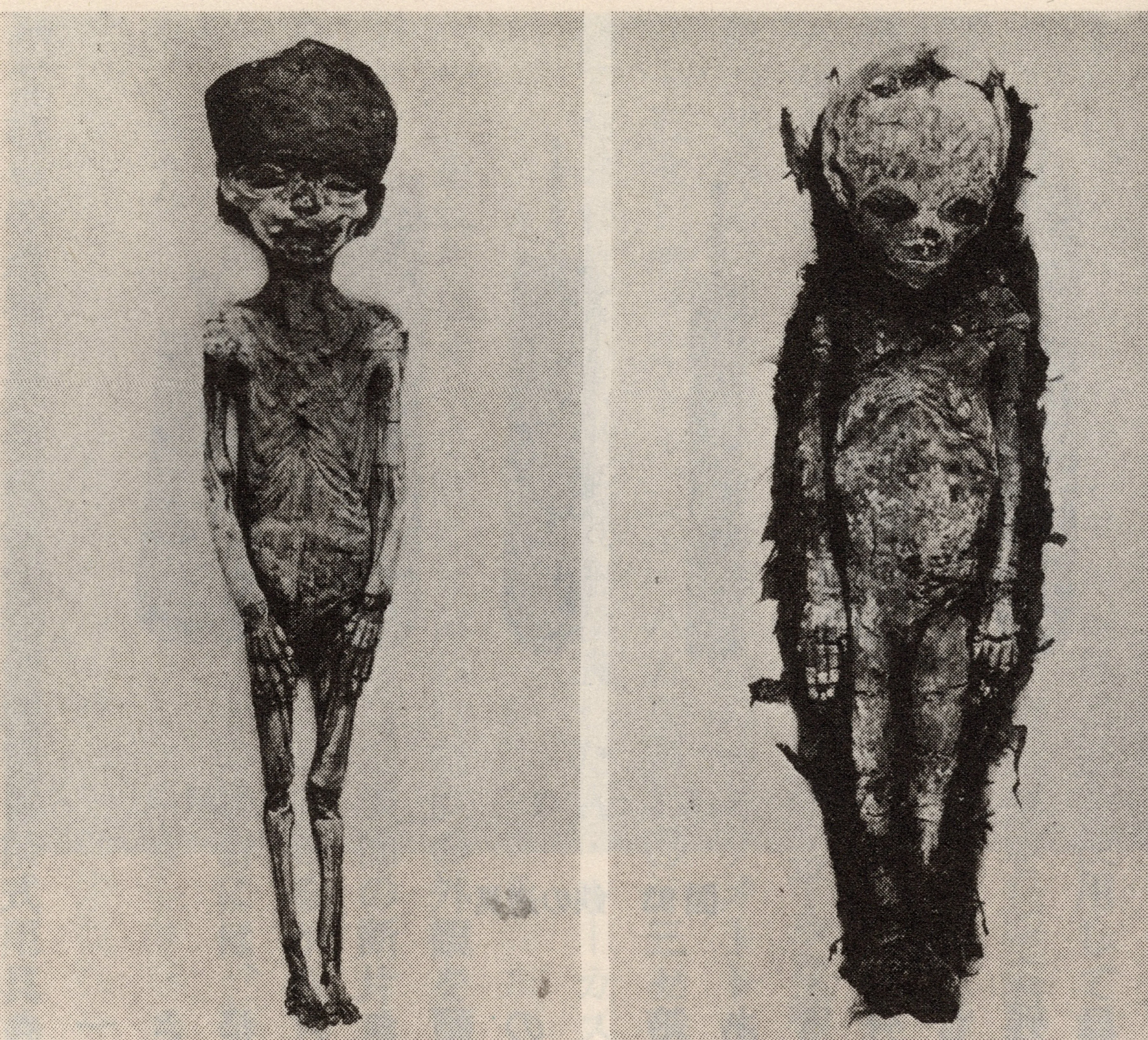
The Small Mummies: Fetuses, Probably The Still Born Daughters Of The King.
One of the most emotionally stirring discoveries within the famed tomb of Tutankhamun was the presence of two tiny mummies. Presumed to be his unborn or newly born daughters who tragically did not survive. Each was carefully sealed within small, elaborately maintained sarcophagi. A poignant gesture that underscores their royal lineage despite their fleeting existence.
Historians and archaeologists have long pondered the significance of these miniature mummies within the tomb. Many believe their inclusion might symbolize an effort to preserve the unity of Tutankhamun’s. Family in the afterlife, in harmony with ancient Egyptian teachings that emphasized eternal connections. Another interpretation suggests these young lives were intended to journey alongside the pharaoh toward immortality, ensuring they remain bonded with him beyond earthly separation.
Amidst the breathtaking treasures found in Tutankhamun’s final resting place. Bejeweled artifacts. Golden relics, ornate chariots, and formidable weapons. The presence of these fragile mummies injects a deeply human layer to the story. They serve as a tender reminder that beyond the grandiose legacy of Egypt’s. Boy king lies an unfinished chapter of family life and personal heartbreak. Such finds enrich the narrative. Adding depth to Tutankhamun’s history and reminding us that even the most exalted figures carried their own share of sorrow.
Here’s the English translation of your table:
| Approximate Year | Event |
|---|---|
| 1341 BCE | Birth of Tutankhamun (original name: Tutankhaton) in the 18th Dynasty. |
| 1332 BCE | Ascends to the throne as a child (around 9 years old) after the death of Akhenaten or his successor “Smenkhkare.” |
| 1331 BCE | Changes his name to “Tutankhamun” to restore the cult of the god Amun and appease the priests of Thebes. |
| 1330 – 1326 BCE | Short reign: restoration of religious and political stability, strengthening the influence of priests, attempts at diplomatic reforms. |
| 1325 BCE | Sudden death of Tutankhamun at a young age (18–19 years). Cause remains mysterious (disease/accident/plot). |
| After his death | Buried in a small tomb (KV62) in the Valley of the Kings due to his short reign and lack of preparation. |
| 1922 CE | Complete discovery of the tomb by British archaeologist Howard Carter, considered the greatest archaeological discovery of the 20th century. |
| Until today | His treasures (over 5,000 objects) are displayed at the Grand Egyptian Museum, the most famous being the gold funerary mask. |
Why Is Tutankhamun Important Worldwide ?
His worldwide recognition stems not from his rule or military accomplishments, but from the astonishing golden artifacts that have captured the imagination of millions. The discovery of his tomb offered an unparalleled glimpse into the opulence and ceremonial practices of ancient Egyptian pharaohs, revealing how they meticulously prepared their sovereigns for the journey to the afterlife.
The Majestic Colossal Statue of Ramses II
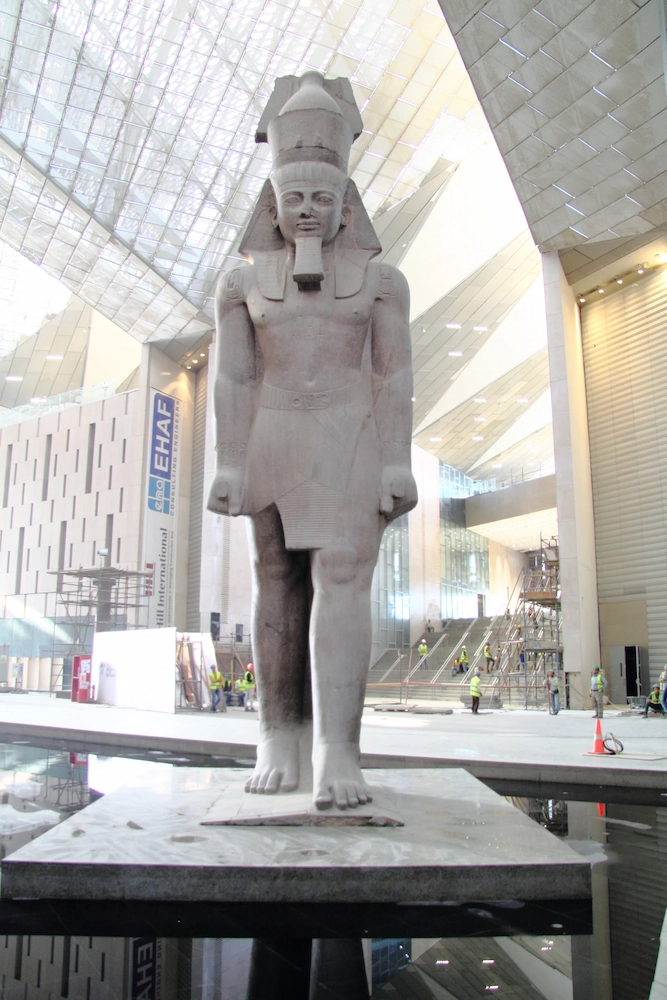
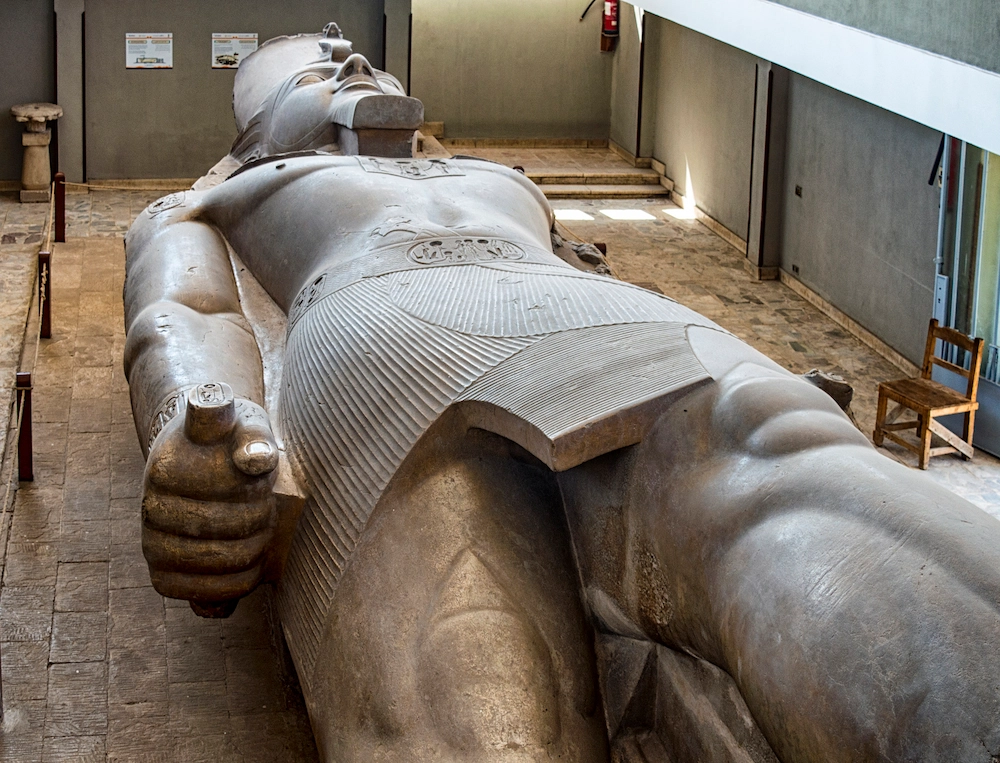
Standing as a testament to the unmatched legacy of ancient Egypt. The colossal statue of Ramses II is more than a mere monument; it’s an enduring symbol of royal power, strength. And splendor. Crafted from pink granite, this awe-inspiring statue weighs an impressive 83 tons and soars to nearly 11 meters in height, placing it among Egypt’s most celebrated artifacts. With its idealized depiction of Ramses II. Featuring a commanding face and muscular physique it portrays a ruler of unparalleled authority, embodying his dual roles as a warrior king and steadfast protector of the realm.
Beyond its artistic brilliance, this masterpiece serves deep political and religious purposes. It communicates Ramses II’s divine association as a living god on Earth, tethered to prominent deities such as Amun and Ra. This visual power play reinforced the pharaoh’s ability to govern, underscoring his role as the divine intermediary between the heavens and his people.
Originally unearthed in 1820 in the Mit Rahina region near Memphis, the statue was discovered fragmented into six pieces. It was relocated to Ramses Square in Cairo in 1955, becoming a focal point for admiration. Finally, in 2006, it found a fitting home at the Grand Egyptian Museum in Giza, where it continues to captivate visitors to this day.
This remarkable creation highlights the ancient Egyptians’ unparalleled skill in carving, transporting, and erecting monumental stoneworks. It’s an undeniable proof that their artistry and engineering prowess. Were intrinsically tied to royal ideology. Forging an eternal legacy of Ramses II as a symbol of unyielding strength and divine immortality through the ages.



The Solar Boat of King Khufu
The Solar Boat of King Khufu stands as a remarkable testament to the ingenuity and engineering expertise of ancient Egypt. This magnificent wooden vessel, originally buried alongside the Great Pyramid. At Giza, It was recently transferred to the Grand Egyptian Museum. was intended to fulfill significant. Spiritual and ceremonial roles either to carry the king’s spirit into the afterlife or to serve in rituals associated with the sun’s divine journey.
Unearthed in a disassembled state from large pits. The boat spans an impressive 43 meters in length and 5.6 meters in width. Crafted entirely from premium Lebanese cedar wood, its construction relied on advanced joinery techniques and ropes rather than metal nails. Showcasing exceptional craftsmanship. With seating designed for over 30 rowers, the ship’s meticulous design highlights a profound. Understanding of both artistic expression and technical precision. It underscores the advanced knowledge of mechanics and maritime engineering possessed by ancient Egyptians.
Symbolic as well as functional, the solar boat embodies the pharaoh’s spiritual union with the divine sun and affirms the belief that the ruler. Linked to the gods, merited an eternal vessel for crossing into the afterlife. The discovery of this extraordinary artifact has offered scholars invaluable insights into shipbuilding methods during the pharaonic era. Illustrating the sophistication of ancient Egyptian engineering. Which stands on par with or exceeds many later civilizations in complexity and accuracy.
The Throne of Queen Hetepheres
A true marvel of ancient Egyptian craftsmanship, the throne of Queen Hetepheres, also referred to as Hetepheret. Stands as a testament to the royal artistry of the era. Crafted from wood and lavishly adorned. With gold, it is embellished with intricate motifs portraying the queen in poised and symbolic positions. Representative of her elevated social and spiritual stature.
The design extends to the armrests and legs, where elements inspired by nature and sacred animals are meticulously incorporated. Meanwhile, the throne’s backrest is adorned with divine and protective emblems, including representations of Osiris and Horus. Designed to ensure the queen’s wellbeing both in her earthly existence and in the afterlife.
Far beyond simply being a seat, this throne represents a profound symbol of royal authority and a consecrated space. It encapsulates the harmony between the terrestrial and spiritual realms of Queen Hetepheres’ life. Furthermore, it highlights the unparalleled expertise of Egyptian artisans in merging artistic elegance with profound religious significance. This exquisite creation embodies the essence of royal power and underscores the queen’s symbolic role in the ancient pharaonic hierarchy.
It was displayed in the Ancient Egyptian Museum and will be transferred to Grand Egyptian Museum


The Statue of the God Ptah
The statue of Ptah, one of the most significant religious figures in ancient Egyptian culture, symbolizes the god of craftsmanship and construction. Highly revered in Thebes and the temple of Memphis, Ptah is frequently portrayed seated on a throne, adorned with the traditional royal crown. The statue exudes an impression of strength and majesty, embodying divine power and profound wisdom.
Crafted from durable stones such as granite or basalt, the statue rises several meters in height, signifying an eternal divine presence within the temple. Its core purpose was religious, serving as a representation of Ptah’s enduring presence during sacred rituals and ceremonies aimed at celebrating the god and safeguarding the kingdom. Additionally, it underscores the deep devotion ancient Egyptians held for their deities, reflected in their dedication to creating grand and authoritative artistic expressions.

The Conservation and Restoration Center at the Grand Egyptian Museum (GEM)
Nestled within the awe-inspiring structure of the Grand Egyptian Museum, the Conservation and Restoration Center stands as an emblem of innovation in heritage preservation. Renowned globally for its cutting-edge capabilities, this center plays a vital role in safeguarding Egypt’s rich cultural legacy. With meticulous care, it takes on the monumental task of conserving more than 100,000 artifacts, each one a precious link to the 7,000-year tapestry of ancient Egyptian history. Serving as the museum’s heartbeat, it embodies dedication to preserving the essence of a civilization that continues to captivate the world.
Equipment of the Center
Spanning approximately 7,000 m², the center stands out as the largest facility of its kind in the Middle East. Within this expansive space are 17 state-of-the-art laboratories where over 100 skilled experts work across diverse fields related to conservation and restoration. These laboratories specialize in the care of various materials, which include:
- Wood
- Leather
- Textiles
- Paper
- Glass
- Clay
- Mummies
- Gold
- Stone
Examples of Advanced Work at the Center
- Restoring painted wooden artifacts, such as the chariots of Tutankhamun.
- Utilizing X-ray imaging and non-invasive methods to analyze artwork and decorative motifs.
- Conducting chemical analyses of pigments to gain insights into their composition and patterns of degradation.
- Creating lighting and exhibition guidelines aimed at minimizing stress and preserving the integrity of artifacts over time.
Modern laboratories at the heart of this center employ cutting-edge techniques to ensure that precious artifacts are preserved to meet the loftiest standards of quality. With a focus on innovation, they elevate the art of conservation to a level befitting the remarkable heritage they protect.
A Central Role in Reviving Tutankhamun’s Legacy
The center plays a pivotal role in safeguarding the treasures of King Tutankhamun, standing as an extraordinary custodian of some of Egypt’s most iconic cultural artifacts. For the first time since their groundbreaking discovery in 1922, these treasures are brought together under one roof, showcased in a sprawling 700-square-meter gallery within the museum. This historic integration offers visitors an unparalleled glimpse into the grandeur of ancient Egypt.
A Model for International Collaboration
The center exemplifies global teamwork, forged through a unique partnership between Egypt and Japan. A development loan provided by the Japan International Cooperation Agency (JICA) fueled much of this bold initiative, creating opportunities for cross-national innovation. Besides funding, this partnership has enabled specialized training for Egyptian conservation experts while also sponsoring the development of a state-of-the-art database to meticulously manage the precious artifacts.
Importance of the Center
The significance of this center transcends artifact preservation it is a dynamic hub for growth, learning, and advancement in the field. Its contributions extend to areas like:
- Empowering Egyptian professionals with specialized training in conservation and restoration techniques.
- Conducting groundbreaking research to unlock secrets behind the materials of ancient relics.
- Innovating fresh approaches to artifact conservation that set international benchmarks.
- Hosting workshops and training programs aimed at enhancing expertise among field specialists.
In essence, this center stands as a beacon of heritage science, merging tradition and technology to not only safeguard history but also inspire future generations.
Examples of Advanced Work at the Center:
- The center undertakes a range of advanced initiatives, including:
- The restoration of painted wooden artifacts, such as the chariots of Tutankhamun.
- The use of X-rays and non-invasive methods to examine paintings and motifs.
- Chemical analysis of pigments to gain insights into their composition and ensure improved conservation methods.
- The creation of lighting and display strategies designed to minimize material degradation.
These efforts have significantly enhanced the ability to present fragile items in a manner that ensures superior safety and preservation compared to earlier display practices.
Exhibited and Applied Technologies & Innovations and Exceptional Practices
The following are notable technological details, some of which stand out for their rarity in archaeological museum settings:
Tutankhamun’s Display in Controlled Showcases (Goppion Display Cases):
he Italian-Spanish company Goppion, renowned for its expertise in museum display systems, engineered and produced hundreds of specialized showcase units for the museum. These advanced cases regulate humidity, pressure, and lighting levels, ensuring the safe presentation of organic artifacts such as wood and textiles over extended periods. The scale of implementation is remarkable, with sources indicating anywhere between 122 and 200 units, depending on the project phase. These cases were commissioned through an international tender process.
Digital and Interactive Visitor Technologies:
he museum incorporates cutting-edge Virtual Reality (VR), Augmented Reality (AR), high-resolution screens, and interactive 3D models that provide visitors the opportunity to explore objects’ structures and uncover hidden layers without handling the originals. Although these technologies are not globally unique, their extensive integration into Tutankhamun’s collection elevates the visitor experience at the GEM to an unparalleled level.

Centralized Digital Database and Network:
A robust digital database has been developed for each artifact in collaboration with international organizations such as JICA and Egyptian authorities. It enables seamless research exchanges, artifact loans, and remote data analysis between museums and global research institutions.

Advanced Environmental and Climate Controls in Galleries:
State-of-the-art HVAC systems ensure precise management of temperature, humidity, and lighting within the galleries. These systems are equipped with continuous monitoring capabilities, advanced sensors, and emergency protocols to safeguard objects against leaks, infiltrations, or equipment malfunctions, effectively extending their preservation lifespan.

Pioneering Restoration Techniques:
The museum employs innovative techniques such as infrared imaging, electron microscopy, and spectroscopic methods like FTIR and XRF to uncover hidden paint layers and restore artifacts without physical contact. These technologies have been integrated into GEM’s staff training programs as part of collaborative international projects.

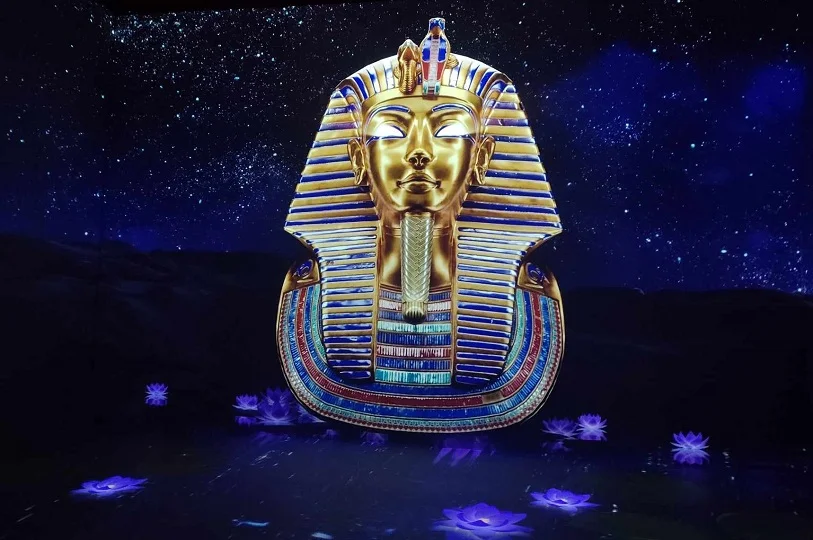
Hologram Technology: A Glimpse into King Tutankhamun’s World:
At the Grand Egyptian Museum, visitors can experience the treasures of King Tutankhamun like never before, thanks to hologram technology. Spread across two expansive halls, encompassing an area of approximately 7,000 square meters, this cutting-edge display transforms how we connect with history.
Holographic projections bring hundreds of Tutankhamun’s artifacts to life, including the iconic golden mask that has captivated generations. But that’s not all hidden gems, never showcased to the public until now, illuminate the everyday life of this legendary young pharaoh. This innovative approach, embraced by leading museums worldwide, offers a breathtaking blend of past and present, bridging the gap between ancient marvels and modern storytelling. Let the holograms guide you through a journey back in time while standing firmly in the future.

Controversial Points or Challenges Faced by the Project
Delays and Cost Disputes:
The project has faced numerous setbacks due to factors such as the COVID-19 pandemic, political circumstances, and logistical hurdles. These extended delays and the increasing expenses have attracted media scrutiny, highlighting concerns about the project’s lengthy timeline and high costs. However, officials assert that these investments are crucial to revitalizing Egypt’s heritage and tourism industry.
Conditions for exhibiting Tutankhamun (security and conservation) :
Difficulty in finding a balance between public accessibility to the artifacts and their long-term preservation, which required advanced display solutions and limited access.
Balancing Tourism and Conservation:
An ongoing challenge is striking a balance between the tourism-driven goals of attracting visitors and boosting economic returns versus the fundamental aim of preserving antiquities for scientific and historical purposes. Concerns have been raised that the focus on tourism could potentially undermine conservation efforts.
Adoption of Modern Technology:
Integrating advanced digital display systems has introduced complexities related to their maintenance and operation. These high-tech systems demand consistent expertise and trained personnel, creating a continuous challenge for long-term sustainability.
Impact on the Egyptian Museum in Tahrir:
The relocation of key exhibits, including Tutankhamun’s treasures, to the new museum has sparked debates regarding its effect on the historic Egyptian Museum in Tahrir Square. Critics question whether the new museum could overshadow or directly compete with its predecessor, potentially diminishing its prominence.
Environmental Challenges:
The site’s proximity to the pyramids brings unique environmental concerns, such as humidity, heat exposure, and pollution. Addressing these issues requires sophisticated preservation techniques to ensure the long-term safety of the artifacts housed within.
What Does the GEM Represent for Science and Research ?
Unparalleled access to Tutankhamun’s complete collection: Bringing together the entire assemblage of the pharaoh in one location paves the way for groundbreaking contextual studies that were previously impossible. Researchers can now conduct direct comparisons of materials, tools, and funerary practices within a unified framework.
State-of-the-art scientific infrastructure: The museum’s advanced laboratories, comprehensive databases, and global networks enhance multidisciplinary archaeological research across fields such as chemistry, biology, physics, materials science, and conservation studies.
conclusion
The Grand Egyptian Museum represents more than just an architectural endeavor; it serves as a unified space to encapsulate Egypt’s archaeological heritage through modern exhibition, research, and restoration, seamlessly blending into the historical backdrop of the pyramids both symbolically and technically.
Its distinction lies in the fusion of an extensive collection, including the iconic treasures of Tutankhamun, cutting-edge conservation facilities, and an innovative museographic experience enhanced by digital technology. Nonetheless, the true challenge resides in realizing these aspirations effectively and ensuring the long-term preservation of artifacts, a commitment that demands continuous scientific and technical effort.

Grand Egyptian Museum
The World’s Largest Archaeological Museum – A Gateway to 7,000 Years of Civilization, Standing at the Foot of the Pyramids
What is the Grand Egyptian Museum (GEM)?
The Grand Egyptian Museum (GEM), located just 1.2 km from the Giza Pyramids, is set to become the world’s largest museum dedicated to a single civilization.
Spanning over 500,000 square meters, it will house more than 100,000 artifacts from ancient Egypt, including the complete collection of Tutankhamun for the first time in history.
Designed by the Irish firm Heneghan Peng, its futuristic architecture blends seamlessly with the pyramids, symbolizing a bridge between the ancient and modern worlds.
Why was the GEM built?
- Preserve National Treasures: Relocate fragile artifacts (especially Tutankhamun’s collection) from the crowded Cairo Museum to a state-of-the-art facility.
- Showcase Egypt’s Legacy: Present 7,000 years of history in one immersive experience near the pyramids.
- Boost Cultural Tourism: Create a world-class destination that attracts millions and elevates Egypt’s global cultural standing.
- Advance Research & Conservation: Establish a leading center for restoration and scientific study.
Who designed the museum and what makes it unique?
Designed by Heneghan Peng Architects (Ireland), the museum won an international competition with over 1,500 entries.
Key Architectural Features:
- Translucent Alabaster Facade: 250,000 hand-carved triangular panels glow at night, mirroring the pyramids.
- Alignment with Khufu Pyramid: The building’s axis aligns perfectly with the Great Pyramid.
- Underground Galleries: Protect sensitive artifacts from heat and light.
- Sustainable Engineering: Advanced climate control by Arup and Buro Happold ensures artifact preservation.
When will the GEM open?
The museum entered a **phased opening** in 2023–2024, with 12 halls opened for testing.
The full official inauguration is expected in 2025, though exact dates may vary.
Over 50,000 artifacts are being prepared for display, with the rest stored or rotated.
What will be displayed from King Tut’s tomb?
For the first time ever, all ~5,400 artifacts from Tutankhamun’s tomb will be displayed together in a 7,500 m² wing.
Highlights include:
- The Golden Mask: Made of 11 kg of solid gold, lapis lazuli, and quartz.
- The Heavenly Dagger: Blade forged from meteoritic iron—older than Earth itself.
- Three Sarcophagi: Outer wooden, middle Osiride, inner solid gold coffin.
- War Chariots: Over 6 lightweight chariots used in battle and ceremony.
- Jewelry & Funerary Furniture: Beds shaped like lions, protective statues, and golden belts.
- The Small Mummies: Two fetuses believed to be Tutankhamun’s stillborn daughters.
What is the significance of the Ramses II statue?
This 83-ton pink granite statue of Ramses II, standing nearly 11 meters tall, is one of Egypt’s most iconic monuments.
Originally found in Memphis in 1820, it was moved to Cairo Square in 1955, then relocated to the GEM in 2006 for protection.
It symbolizes royal power, divine kingship, and the eternal legacy of one of Egypt’s greatest pharaohs.
What is the Solar Boat of Khufu?
A 4,500-year-old ceremonial vessel buried beside the Great Pyramid, believed to carry Khufu’s soul across the sky with the sun god Ra.
Measuring 43 meters long, made of Lebanese cedar, held together by ropes—not nails.
Now housed in a dedicated hall at the GEM, it’s a masterpiece of ancient engineering and spiritual belief.
What is the role of the Conservation Center?
The largest conservation center in the Middle East (7,000 m²) with 17 labs for:
- Wood, leather, textiles, glass, stone, mummies, gold, and paper.
- X-ray imaging, pigment analysis, and non-invasive diagnostics.
- Restoration of Tutankhamun’s chariots and organic artifacts.
Funded by JICA (Japan), it trains Egyptian experts and sets global standards in heritage science.
What advanced technologies are used?
- Goppion Display Cases: Humidity, temperature, and pressure-controlled cases for organic artifacts.
- Holograms & VR: Bring Tutankhamun’s life and treasures to life in 3D.
- AR & Touchscreens: Explore layers of paintings and inscriptions without touching originals.
- Digital Database: A centralized system for global research collaboration.
- Infrared & Spectroscopy: Reveal hidden paint and materials without damage.
What challenges has the project faced?
- Delays: Due to political changes, funding issues, and the pandemic.
- High Costs: Estimated at $1 billion, raising questions about budget use.
- Tourism vs. Conservation: Balancing public access with artifact safety.
- Tahrir Museum Impact: Concerns about overshadowing the historic Egyptian Museum.
- Environmental Risks: Heat, humidity, and pollution near the pyramids require constant monitoring.
| Feature | Detail |
|---|---|
| Name | Grand Egyptian Museum (GEM) |
| Location | Giza Plateau, 1.2 km from the Pyramids |
| Size | 500,000 m² (50 hectares) |
| Artifacts | Over 100,000 (50,000 on display) |
| Main Attraction | Complete Tutankhamun Collection |
| Iconic Statue | Colossal Ramses II (83 tons) |
| Conservation Center | Largest in Middle East (7,000 m²) |
| Opening | Phased since 2023, full launch expected in 2025 |
| Architect | Heneghan Peng (Ireland) |


