

Kom Ombo Temple: The double temple that combines Sobek and Horus
Introduction
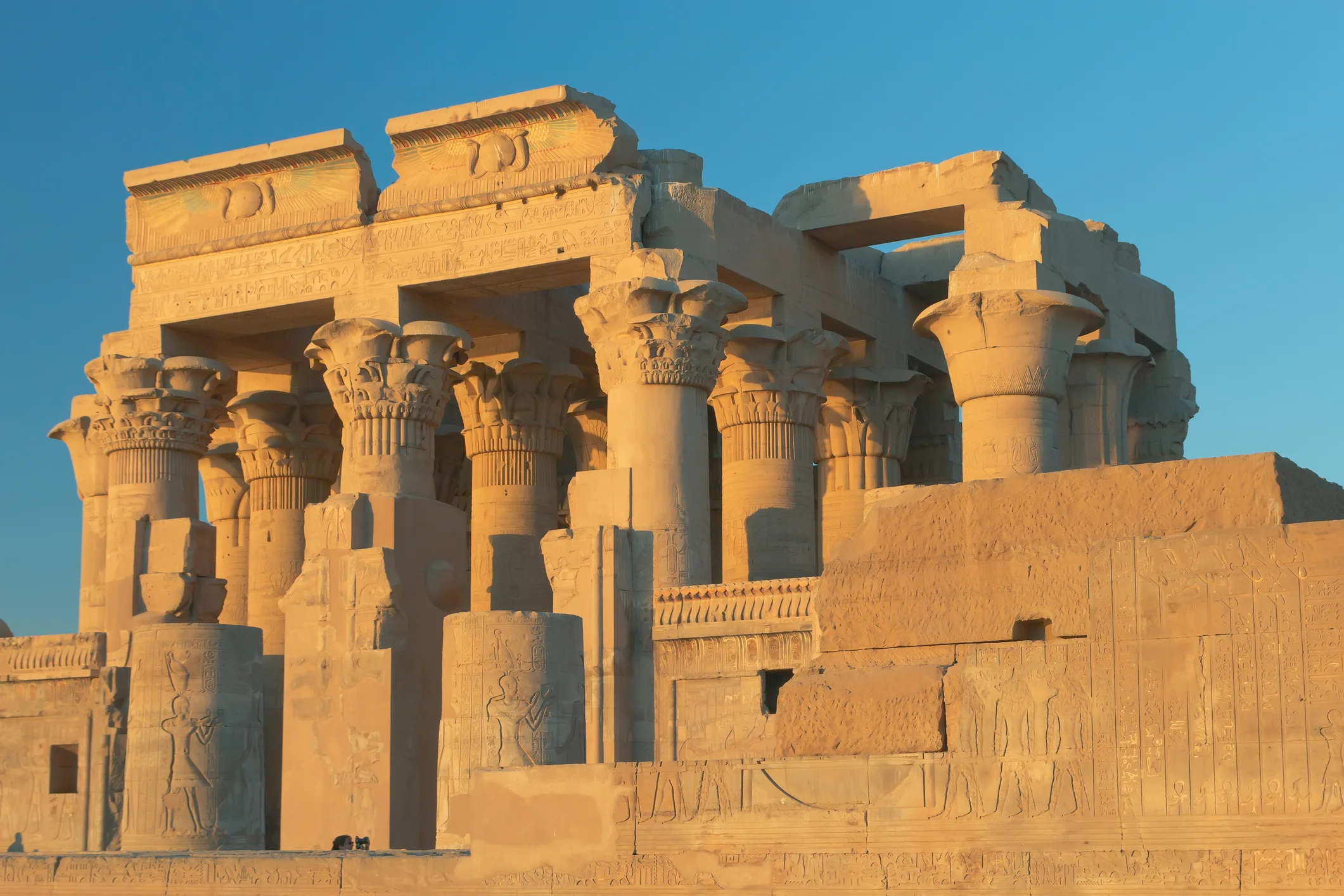
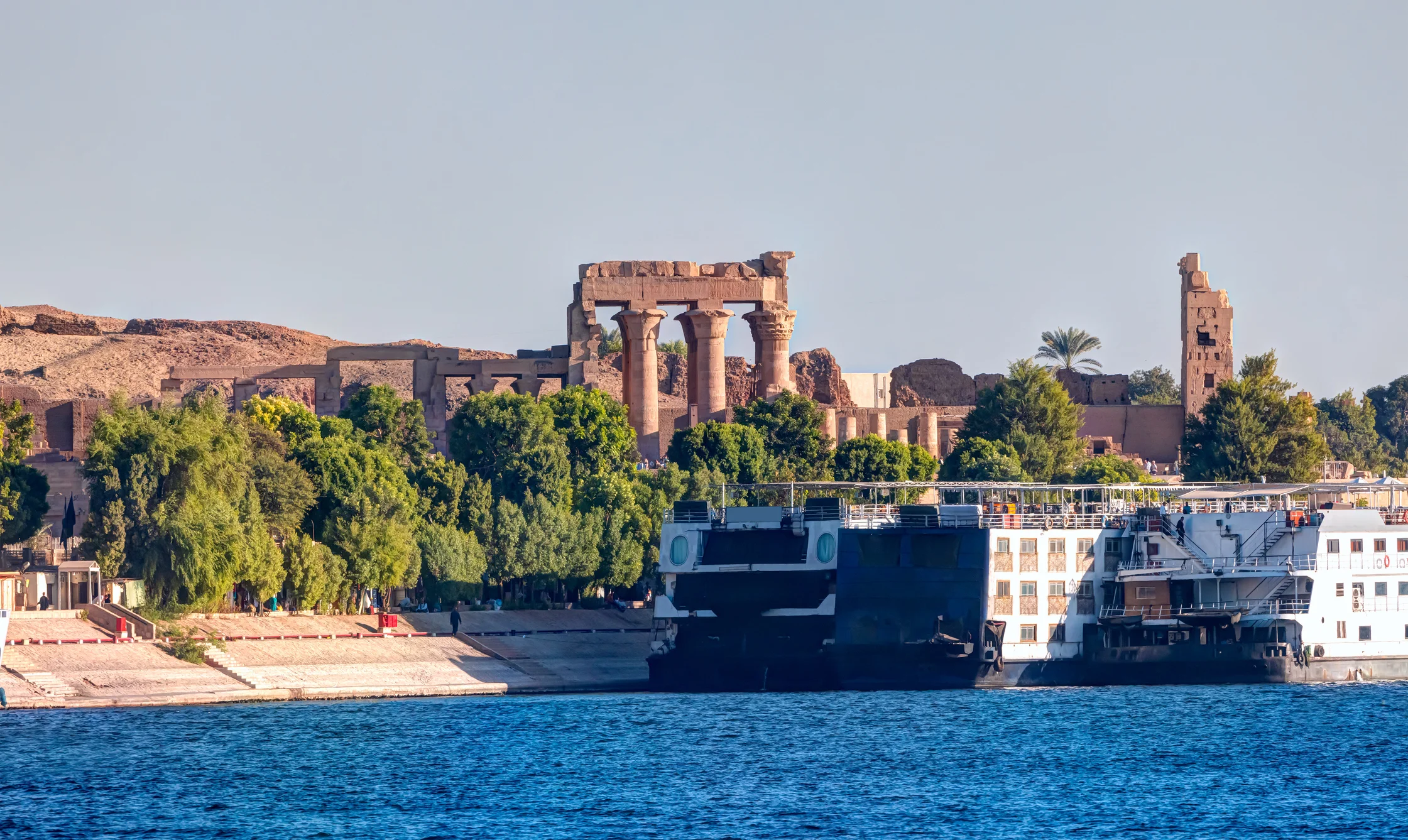
The Temple of Kom Ombo is one of the most remarkable temples in ancient Egypt, not only because of its location overlooking the Nile River, but also because it is virtually the only temple dedicated to two deities in a symmetrical double-decker architectural design. Located in the city of Kom Ombo, about 40 km north of Aswan, the temple represents an important period in Egyptian history during the Ptolemaic era.
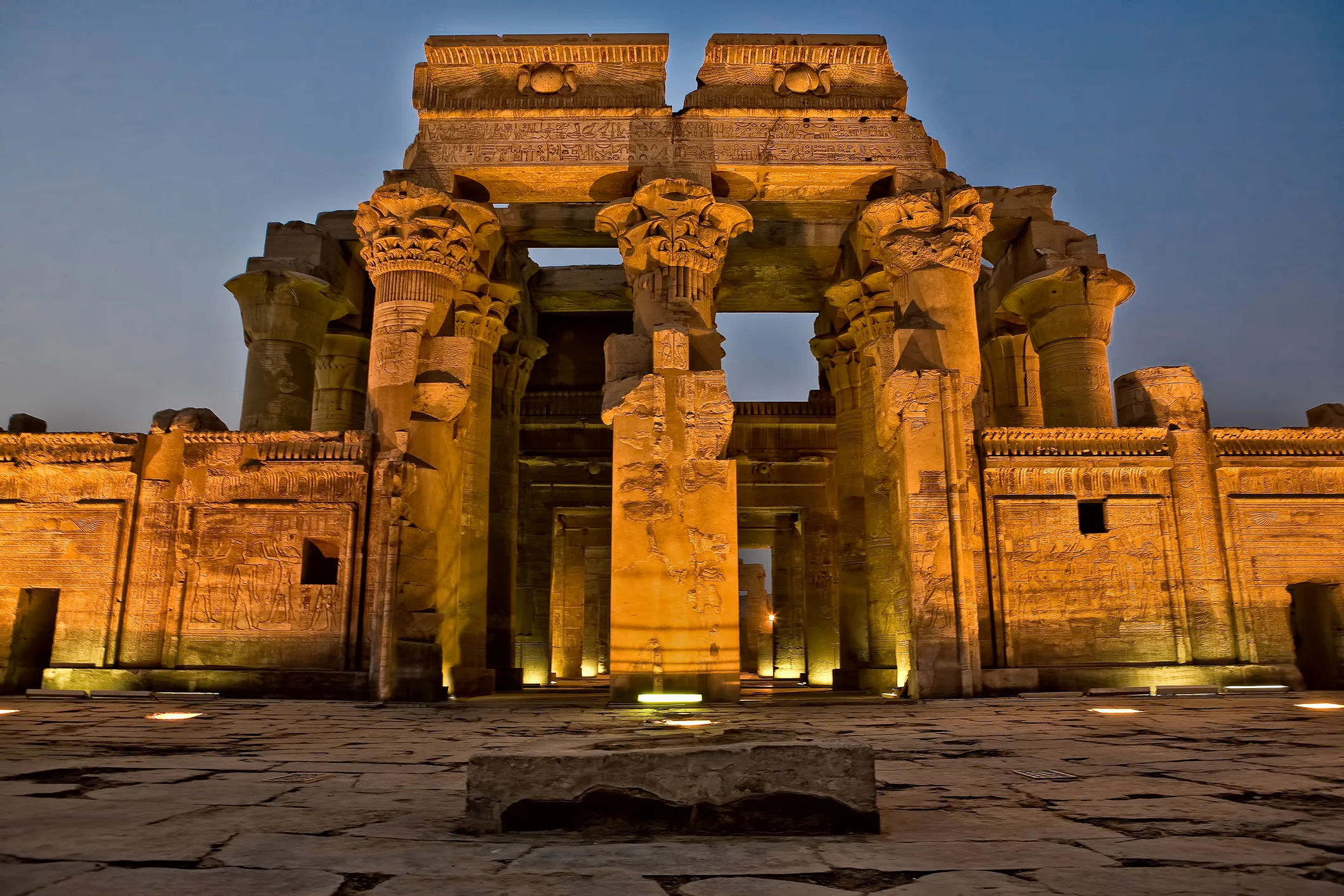
Beginning of Construction
The Temple of Kom Ombo began its construction in the early 2nd century BC, approximately in 180 BC, during the reign of Ptolemy VI Philometor. His rule lasted from 180 to 145 BC, marking his place as a notable figure within the Ptolemaic dynasty that governed Egypt following the passing of Alexander the Great.
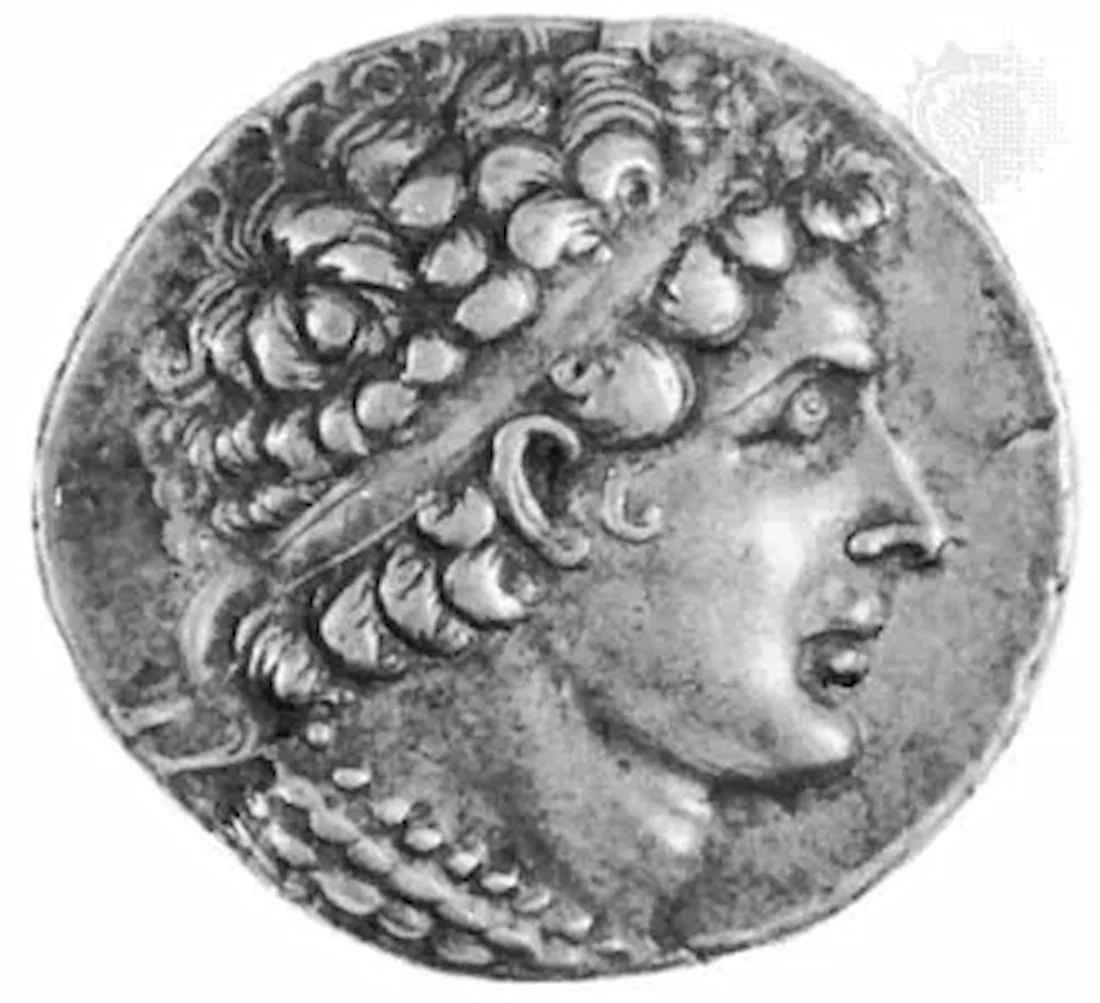
Phases of Expansion and Development
The temple’s development unfolded over time, with ongoing construction and ornamentation under the rule of subsequent Ptolemaic monarchs. Prominent contributors include Ptolemy VIII (Euergetes II), who introduced key architectural elements and significant religious inscriptions, and Ptolemy XII (Auletes), under whom various decorative features and wall reliefs were completed.
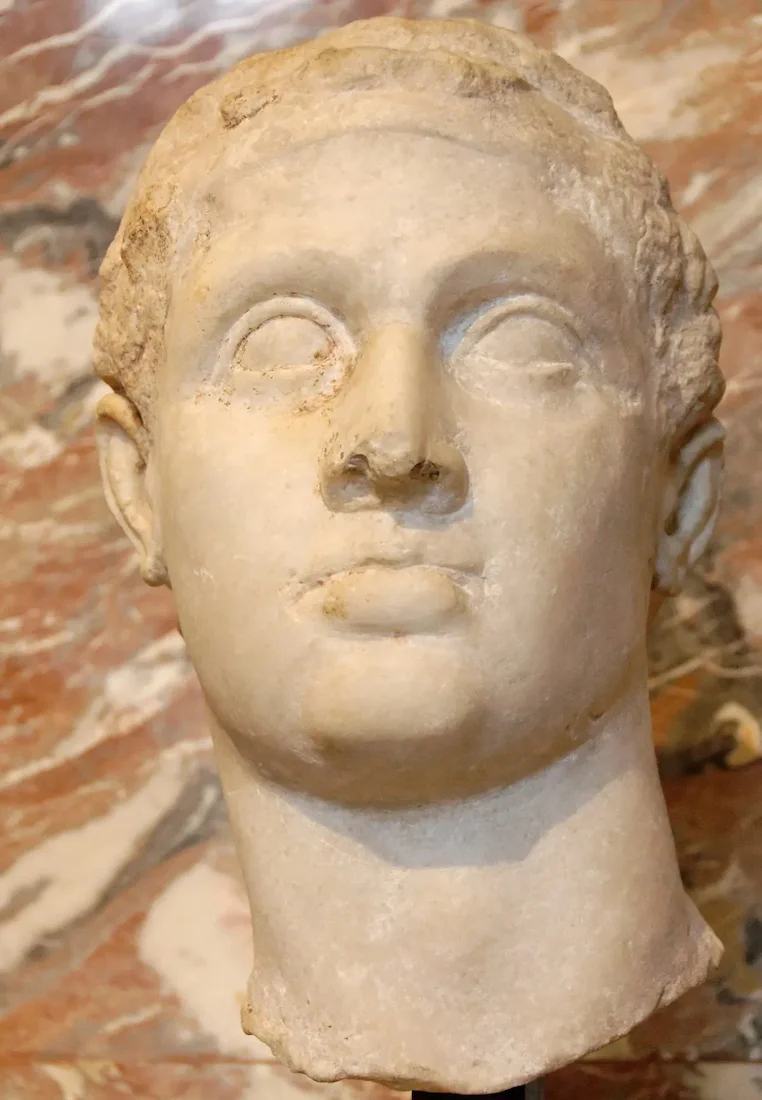
After Egypt fell under Roman control in 30 BC, the Temple of Kom Ombo continued to evolve. Both Emperor Augustus and Emperor Tiberius commissioned additional decorations and inscriptions, reflecting the Romans’ effort to maintain Egypt’s religious traditions and honor its sacred sites.
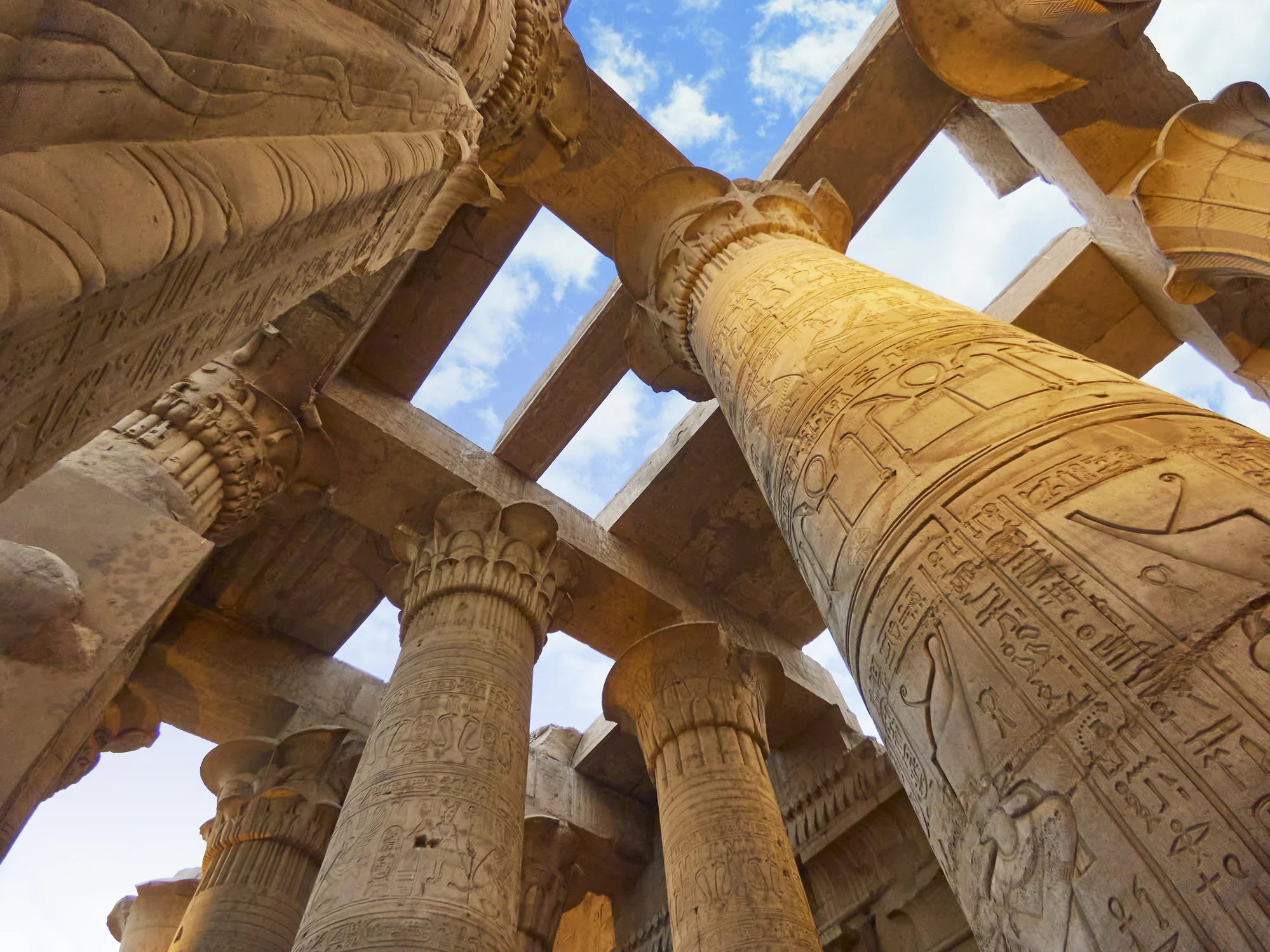
Additions During the Roman Period
Although the current temple represents a blend of Ptolemaic and Roman architectural styles, there is evidence suggesting the presence of an earlier sanctuary at this location, possibly dating back to the New Kingdom during the reign of Thutmose III. However, remnants from this earlier era are sparse.
Why Was the Temple of Kom Ombo Built?
The Temple of Kom Ombo stands as a fascinating architectural marvel, unique in its purpose and design. Unlike many other temples in ancient Egypt, this one was dedicated to the simultaneous worship of two powerful deities, making it a symbol of duality and harmony in Egyptian culture.
Honoring the Deities: The Duo of Sobek and Horus
Sobek: The Crocodile God Sobek, the fearsome crocodile god, held deep significance in Egyptian mythology. Tied closely to the forces of nature, he represented:
– The life-giving waters of the Nile
– Fertility and abundance
– Strength and protection
Sobek embodied the raw, untamed power of nature, especially the awe-inspiring yet dangerous essence of the Nile River. Worshiping him made absolute sense in Kom Ombo, a region situated right on the Nile’s banks, known historically for its population of crocodiles.
Horus the Elder (Haroeris): The Sky God Contrast Sobek’s primal energy with the dignified presence of Horus the Elder, a celestial deity associated with order and guardianship. He symbolized:
- – The sky and heavenly light
- – Justice and balance
- – Sovereignty and victory over chaos
Horus represented protection, guidance, and divine kingship—offering harmony in opposition to Sobek’s untamed nature.
A Temple of Duality and Balance
More than a place of worship, the Temple of Kom Ombo reflects a philosophical depth unique to ancient Egyptian thought. It was a sacred space that acknowledged and celebrated the coexistence of contrasting forces. Here’s how Sobek and Horus personify this idea:
| Category | Sobek | Horus the Elder |
|---|---|---|
| Domain of Influence | Water (particularly the Nile) | The Sky |
| Natural Representation | Raw, untamed physical strength | Divine order and cosmic authority |
| Aspect of Nature | The dangerous and unpredictable forces of nature | Protection, light, and celestial power |
| Symbolic Associations | Fertility, vitality, and military prowess | Kingship, legitimacy, and royal protection |
| Sacred Animal | Crocodile | Falcon |
| Religious Role in Ancient Egypt | Protector of the Nile and embodiment of pharaonic power | Guardian of kingship and manifestation of divine rulership |
This dual design underscores the ancient Egyptians’ nuanced view of life. They didn’t treat good and evil as strictly opposing entities but as forces that needed to be harmonized. At its core, the temple aimed to embody Ma’at the cosmic principle of balance essential for harmony in the universe.
A Political and Social Significance
While deeply spiritual in purpose, the temple also carried political weight.
During the Ptolemaic period, when Greek rulers governed Egypt, it became vital to win over Egyptian locals. To do so, they constructed temples like Kom Ombo in traditional Egyptian styles, emphasizing regional deities with strong cultural resonance. Sobek was particularly revered in this area, making his inclusion a strategic political choice.
Thus, the temple was not merely a religious sanctuary but also a tool for fostering political unity and cultural pride. It symbolized:
- Religious devotion
- Political diplomacy
- Social cohesion
The Concept of Duality (Double Symmetry)
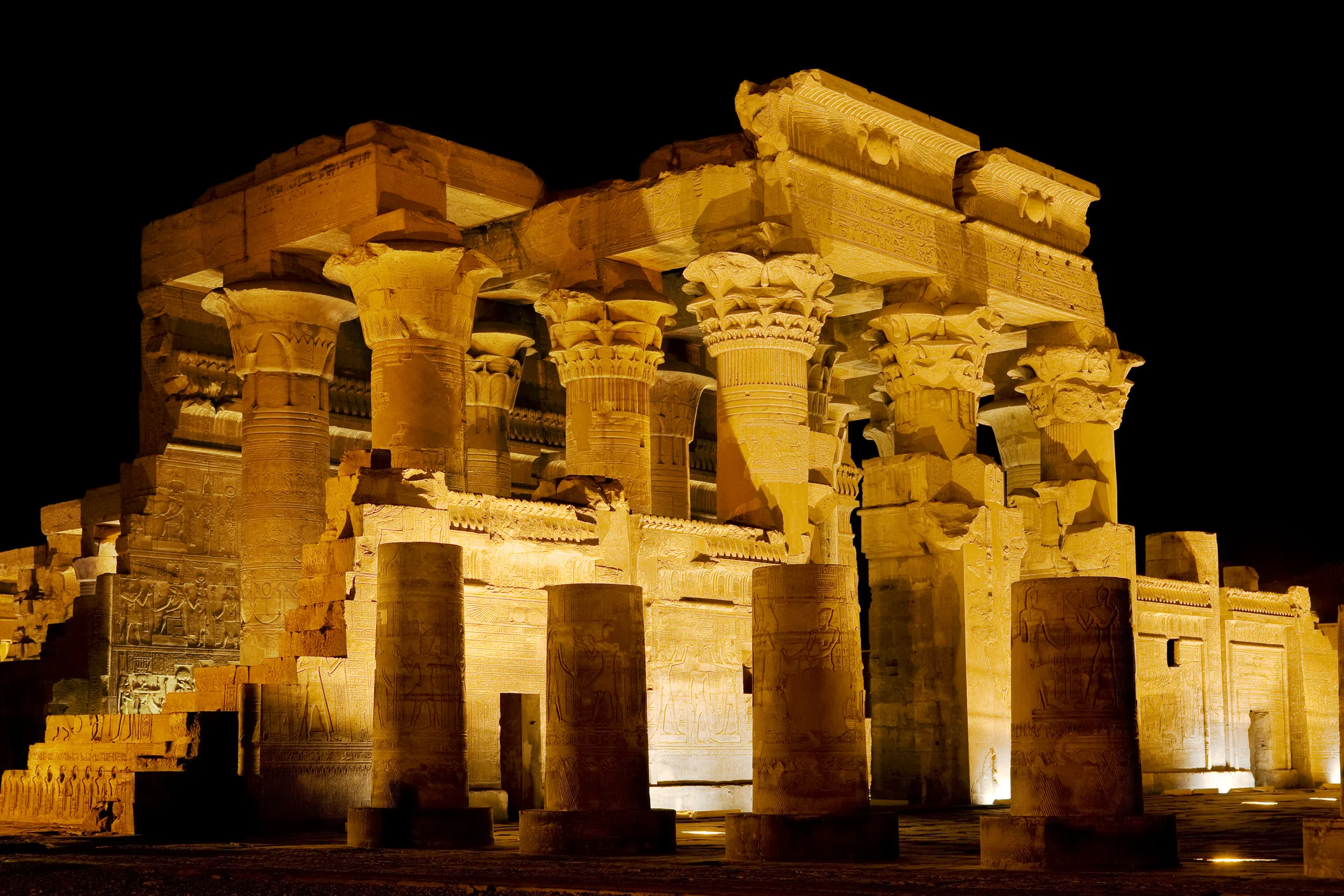
The Kom Ombo Temple is uniquely divided along its central axis into two perfectly symmetrical halves:
Left Side: Dedicated to Horus the Elder
Right Side: Dedicated to Sobek
Each half maintains its own architectural elements, mirrored perfectly to achieve a flawless sense of symmetry.
Design Elements in Focus
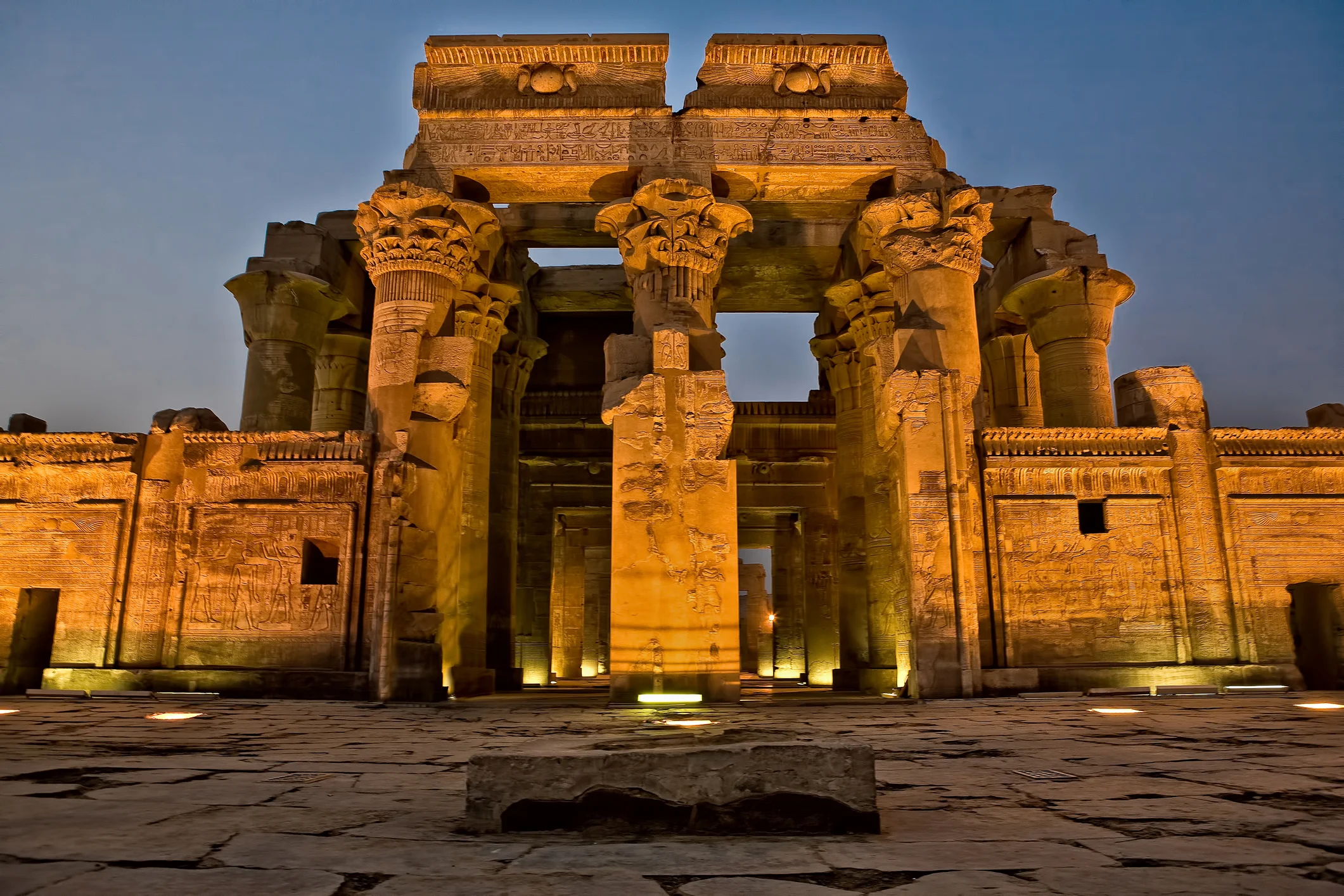
1) Dual Entrances
The temple features two adjacent main entrances, each leading to a section devoted to one of the two gods. This symbolic design highlights the equal stature of Horus and Sobek.
2) Twin Open Courtyards
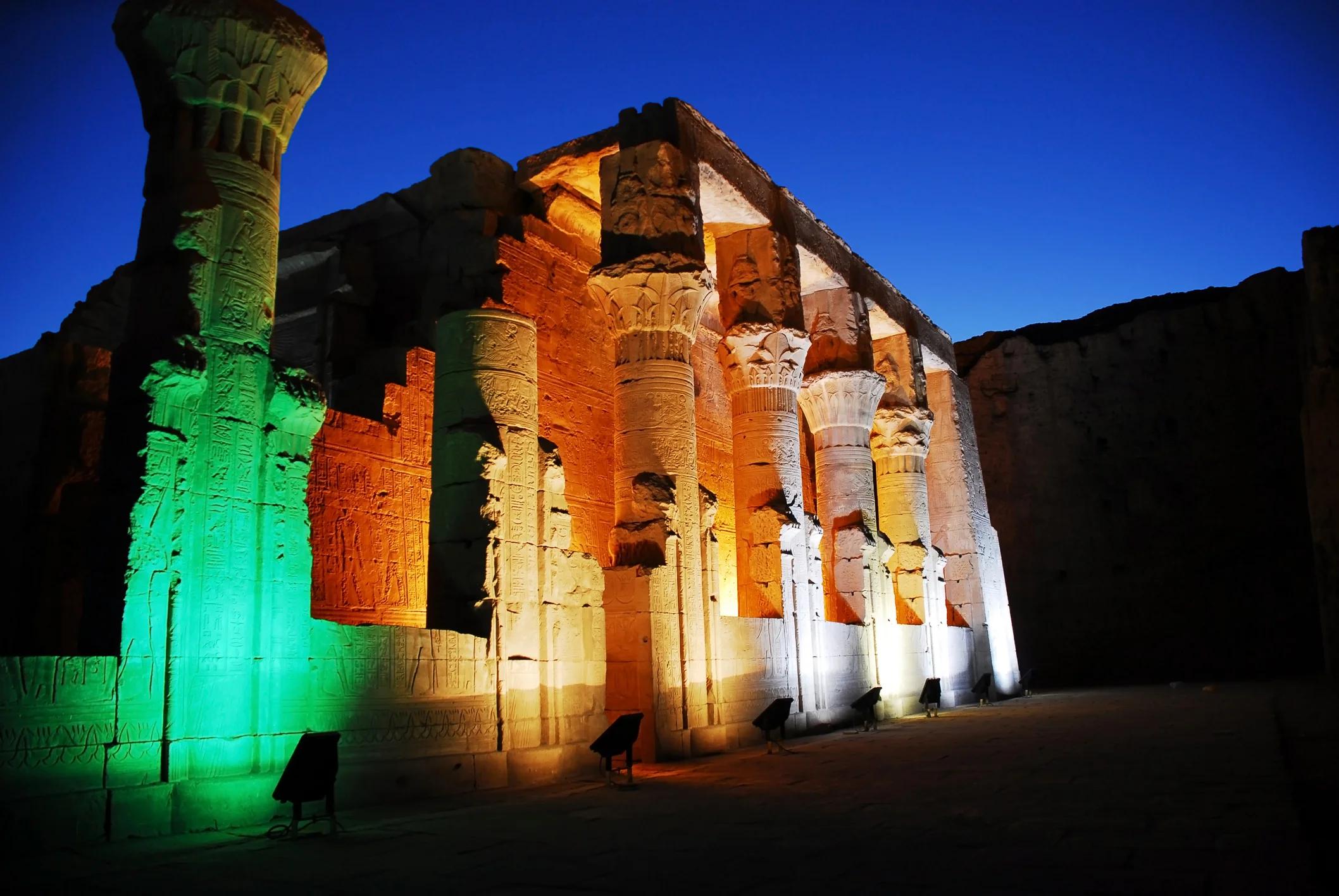
Beyond the entrances lie two open courtyards where public rituals were performed. Columns inscribed with religious texts enclose each courtyard, with content specific to the deity of that side.

3) Pair of Hypostyle Halls
Each god is honored with their own columned hall. These halls are adorned with elaborate scenes, including depictions of Ptolemaic rulers presenting offerings and other imagery unique to each deity’s worship.


4) Two Sanctuaries (Holy of Holies)
At the heart of the temple are two sanctuaries, one for Horus the Elder and one for Sobek. Each housed the statue of its respective god, marking the holiest area within the structure.


The Essence of Geometric Symmetry
Constructed along a straight central axis, every architectural element on one side is mirrored by its counterpart on the other. This meticulous symmetry symbolizes deeper concepts such as:
– Balance and equilibrium
– The principle of Ma’at (cosmic order)
– Harmony between opposing forces
Uniqueness in Design
Unlike most Egyptian temples, which are predominantly dedicated to one primary deity with others playing secondary roles, Kom Ombo Temple is exceptional in that:
- Both Horus and Sobek share equal status.
- There is no hierarchical relationship between the gods.
- The temple’s layout reflects and reinforces this theological equality.
This rare approach makes Kom Ombo Temple a distinctive masterpiece of Egyptian architecture, embodying the religious doctrine and the philosophy of duality.
The Main Inscriptions Within the Temple of Kom Ombo
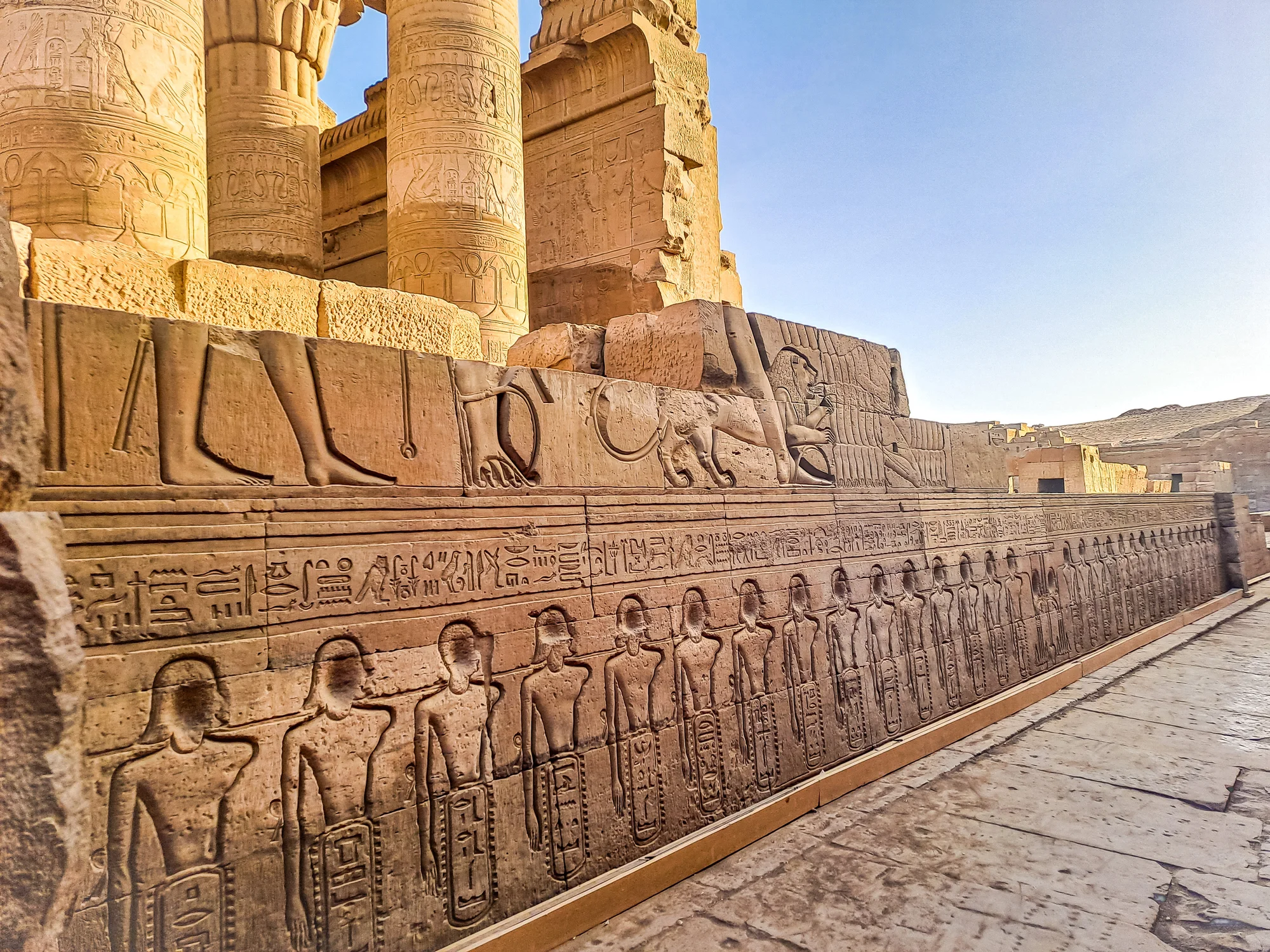
The Temple of Kom Ombo serves not only as a site of worship but also as an open-air museum, showcasing intricate reliefs that provide insight into the religious, scientific, and economic facets of ancient Egyptian life. Some of the most significant inscriptions include:
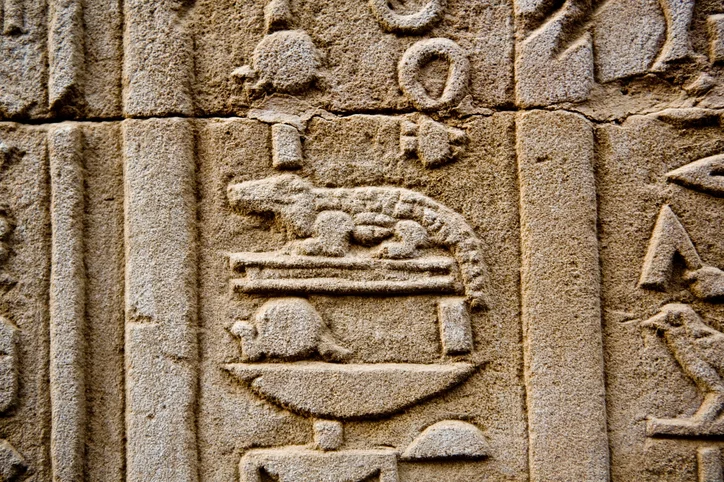
1-The Reliefs of Surgical Instruments – The Most Renowned
These are located on the temple’s rear wall and illustrate detailed representations of ancient medical tools such as:
– Scalpels
– Forceps
– Scales
– Measuring equipment
Historical Importance:
- Recognized as some of the oldest known depictions of medical instruments in history.
- Offer evidence of the advanced state of medicine in ancient Egypt.
- Highlight the ancient Egyptians’ profound understanding of anatomy and surgical practices.
2-The Egyptian Calendar Inscriptions
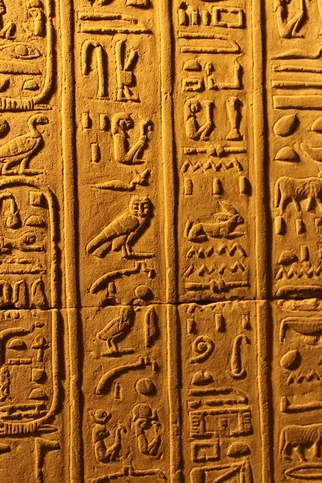
These inscriptions provide a detailed depiction of an ancient Egyptian calendar that marks:
- Official festivals
- Agricultural cycles
- The periods of the Nile’s annual flooding
Significance:
– Serves as a valuable resource for understanding the interplay between religion and daily life.
– Highlights how ancient Egyptians structured their lives around agriculture and the rhythms of the Nile.
3- Scenes of Offering Rituals
These reliefs portray Ptolemaic kings presenting offerings to the temple’s dual gods, Sobek and Horus. The offerings depicted include:
1-Food
2- Beverages
3- Sacred symbols
Significance:
Reflects efforts by the Ptolemaic rulers to legitimize their religious authority and affirm dedication to the gods.
Demonstrates the unbroken connection between political power, religious devotion, and governance in Ptolemaic Egypt.


Are There Burials Inside the Temple?
The temple itself was not used as a tomb, but it was part of a religious complex.
Nearby, archaeologists discovered:
- Crocodile mummies in tombs specially dedicated to them
- A small museum of mummified crocodiles next to the temple
This confirms how sacred and revered the god Sobek was in the region.
The Roman Period and Its Influence on the Temple
During Roman rule, the temple continued to be used, and emperors had inscriptions bearing their names carved there.
However, with the spread of Christianity in the 4th century AD, its use declined, and it suffered some destruction.
Here is the English translation of your text:
Recent Archaeological Discoveries at the Temple of Kom Ombo
The role of the Temple of Kom Ombo has not been limited to being merely a historical monument; it continues to reveal new secrets that confirm its religious and scientific importance.
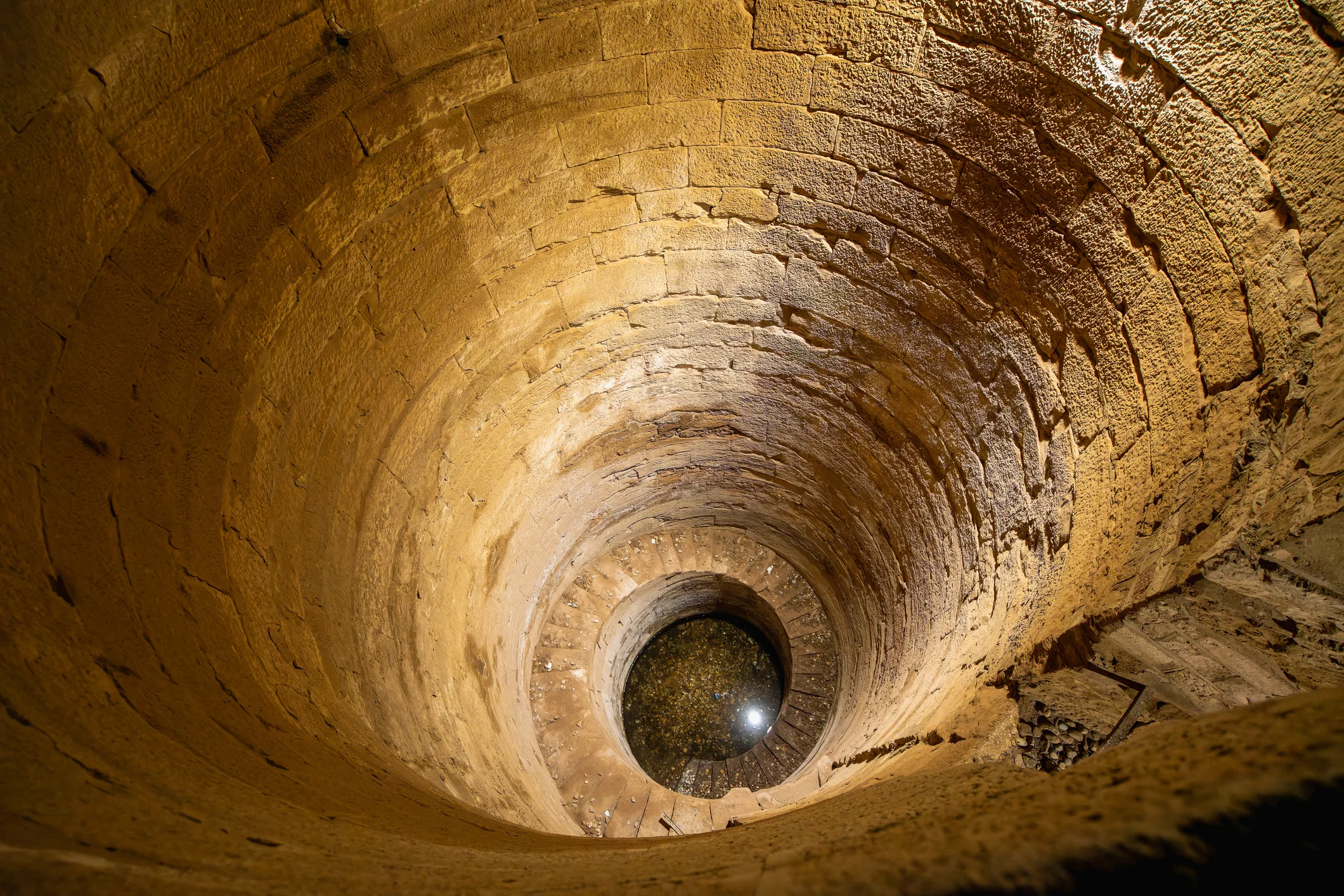
The Nile Measuring Well (Nilometer)
Remains of a nilometer were discovered inside the temple or nearby.
What is a nilometer?
It was a well or stone device used to measure:
- The level of the Nile waters
- The timing of the flood
- The determination of agricultural taxes
Its Importance:
- It was directly linked to the worship of the god Sobek (god of the Nile and fertility).
- It shows how religious administration was closely connected to the economy and agriculture.
- It proves that the temple was not only religious, but also an administrative and economic center.
Stone Statue Fragments
The following were discovered:
- Heads of Ptolemaic kings’ statues
- Fragments of statues of deities
- Decorated stone blocks
Their Significance:
- They confirm the continuation of expansion work during the Ptolemaic and Roman periods.
- They reflect the artistic refinement of sculpture.
- They help researchers reconstruct the temple’s original appearance.

Discoveries Related to the Crocodile Cult
Since the temple is dedicated to the crocodile god Sobek, archaeologists found:
- Mummified crocodiles
- Small stone sarcophagi for crocodiles
- Remains of tombs dedicated to them
Their Importance:
- Clear evidence of the veneration of crocodiles in the region.
- Illustration of the mummification rituals of sacred animals.
- Reflection of the close relationship between the inhabitants, the Nile, and the surrounding natural environment.


Rare Facts About the Temple of Kom Ombo
The Temple of Kom Ombo stands as a fascinating testament to ancient Egyptian architecture and culture, but did you know these intriguing facts about it?
This iconic structure once faced significant damage due to an earthquake, which led to the collapse of large sections of its magnificent design. Despite this, the remaining portions continue to exude a sense of grandeur and historical significance.
Interestingly, the temple wasn’t always located where it stands today. Its original site was closer to the Nile River. However, as the river’s course shifted over time, new parts of the monument emerged, unveiling even more secrets of its ancient past.
One of the most remarkable aspects of the Temple of Kom Ombo is its medical reliefs. These carvings are believed to be among the oldest illustrated depictions of surgical practices in the world, capturing the ingenuity of ancient Egyptian medicine.
A particularly fascinating piece housed within the temple is an inscription showcasing tools that were used to measure pregnancy durations and assist in childbirth. This extraordinary insight speaks volumes about the advanced understanding and practices of the ancient Egyptians in healthcare.


The Temple’s Importance Today
The Kom Ombo Temple is one of the most important tourist attractions in Upper Egypt, and it boasts a stunning sunset view of the Nile, making it one of the most photographed sites in the region.

Kom Ombo Temple
The Only Double Temple in Egypt — Dedicated to Sobek the Crocodile God and Horus the Falcon God
What makes Kom Ombo Temple unique?
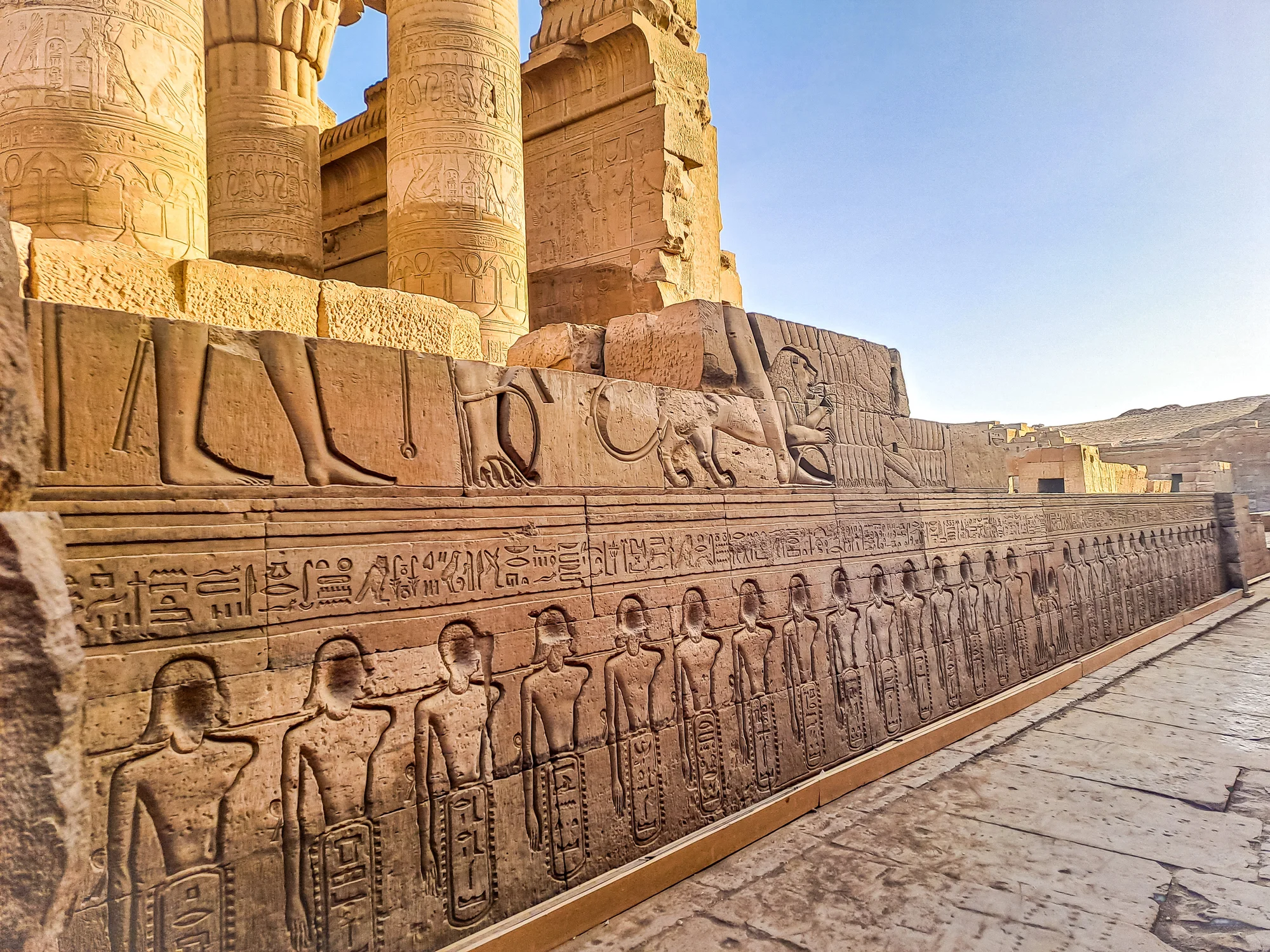
Kom Ombo Temple is the only known temple in Egypt that is perfectly symmetrical and dedicated to two major deities:
- Sobek — the crocodile god of the Nile, fertility, and military power.
- Horus the Elder (Haroeris) — the falcon god of the sky, kingship, and protection.
Built during the Ptolemaic period (2nd century BC), its mirrored design reflects the ancient Egyptian philosophy of balance (Ma’at) — honoring both chaos (Sobek) and order (Horus) as essential cosmic forces.


Who built the temple and when?
Construction began around 180 BC under Ptolemy VI Philometor and continued under later Ptolemaic rulers like Ptolemy VIII and Ptolemy XII.
During the Roman period (after 30 BC), emperors such as Augustus and Tiberius added inscriptions and decorative elements, blending Roman authority with Egyptian tradition.
Though the current structure is Ptolemaic-Roman, evidence suggests an earlier New Kingdom sanctuary may have existed on the site.
How is the temple divided?
Every element of the temple is duplicated along a central axis:
| Left Side | Right Side |
|---|---|
| Dedicated to Horus the Elder | Dedicated to Sobek |
| Falcon symbolism | Crocodile symbolism |
| God of sky and order | God of Nile and primal power |
| Sanctuary for Horus | Sanctuary for Sobek |
| Hypostyle hall with Horus reliefs | Hypostyle hall with Sobek reliefs |
This duality wasn’t just architectural — it was theological, reflecting the belief that harmony arises from balancing opposing forces.
Why worship a crocodile and a falcon together?
Sobek represented the untamed power of the Nile — dangerous yet life-giving. Crocodiles were common in this region, making his cult especially strong.
Horus symbolized divine kingship, justice, and the triumph of order over chaos.
By honoring both, the temple acknowledged that civilization needs both fertility and control, power and wisdom.
What are the famous medical carvings?
On the rear wall of the temple, you’ll find the oldest known depiction of surgical tools in human history, including:
- Scalpels
- Forceps
- Sutures
- Measuring scales
- Medicine bottles
These reliefs prove that ancient Egyptians had advanced knowledge of anatomy, surgery, and pharmacology — centuries before Hippocrates.

Are there astronomical or agricultural inscriptions?
Yes! The temple features:
- Egyptian calendar carvings marking festivals, harvests, and the Nile flood cycle.
- A nearby nilometer (recently discovered) used to measure Nile water levels — directly linked to Sobek’s role as god of the river.
This shows the temple wasn’t just religious — it was also an administrative and scientific center for the region.


Were crocodiles really mummified here?
Absolutely. Archaeologists discovered:
- Mummified crocodiles buried in tombs near the temple.
- Stone sarcophagi made specifically for sacred crocodiles.
- A small Crocodile Museum next to the temple displaying these mummies.
This confirms that Sobek wasn’t just symbolic — real crocodiles were revered as living embodiments of the god.
Why do Roman emperors appear in Egyptian art?
Roman rulers like Augustus and Tiberius are shown in full pharaonic regalia — offering to Sobek and Horus — to:
- Legitimize their rule in the eyes of Egyptians.
- Show respect for local religion.
- Position themselves as heirs to the pharaohs.
This cultural fusion is a hallmark of Roman-era temples in Egypt.
| Feature | Detail |
|---|---|
| Name | Kom Ombo Temple (Temple of Sobek and Haroeris) |
| Location | 40 km north of Aswan, on the east bank of the Nile |
| Built | c. 180 BC (Ptolemaic), expanded under Romans |
| Deities | Sobek (crocodile) and Horus the Elder (falcon) |
| Unique Feature | Only perfectly symmetrical double temple in Egypt |
| Famous For | World’s oldest surgical instrument carvings |
| Modern Site | Includes Crocodile Museum and nilometer |
What should I not miss?
Don’t miss:
- The medical relief wall — bring a flashlight to see details.
- The symmetrical courtyards and sanctuaries.
- The Crocodile Museum next door.
- Sunset views over the Nile — one of Egypt’s most photographed moments.
Best time to visit: early morning or late afternoon to avoid heat and crowds.
Kom Ombo Temple is more than stone and carving — it is a philosophical statement in architecture.
In a world that often seeks to eliminate opposites, the ancient Egyptians embraced them. Here, the crocodile and the falcon, chaos and order, earth and sky, coexist in perfect harmony.
Standing by the Nile, where Sobek once ruled the waters and Horus watched from the heavens, one feels the timeless wisdom of a civilization that understood: true balance lies not in choosing one side, but in honoring both.


