

Valley of the Queens in Luxor: The Eternal City of Queens and Princesses

Introduction
On the west bank of Luxor, behind the Theban Mountains, lies a tranquil valley whose walls hold the secrets of ancient Egypt’s most powerful women. This is the Valley of the Queens, known to the ancient Egyptians as Ta-Sekheret, meaning “the place of the royal children.” In this valley, the queens of the royal dynasties and their children found eternal rest, far from the noise of temples and daily life.

Origin and History of the Valley of the Queens:
Foundation:
Pharaohs established the Valley of the Queens as a royal burial site during the 18th Dynasty, around 1550 BCE.
Map For The Valley Of The Queens

| Tomb No. | Owner / Dedicated To | Dynasty / Period | Notable Remarks |
|---|---|---|---|
| QV8 | Hori and a royal daughter | 18th Dynasty | Shared use between prince and princess |
| QV17 | Merytre & Wermeryotes (Princesses) | 18th/19th Dynasty | Traditionally numbered 17 |
| QV30 | Nebiri (Chief of Stables) | 18th Dynasty | Known from fragments |
| QV31 | Unknown Queen / King’s Wife | 19th Dynasty | Attribution uncertain |
| QV33 | Tanedjemet (Princess/Queen) | 19th Dynasty | Daughter and wife of royalty |
| QV34 | Unknown Queen / Princess | 19th Dynasty | Poorly preserved |
| QV36 | Unknown Princess | 19th Dynasty | Incomplete decorations |
| QV38 | Sitre (Great Royal Wife) | 19th Dynasty | Consort of Ramesses I |
| QV40 | Royal Wife and Granddaughter | 19th Dynasty | Attributed to a royal female |
| QV42 | Pareherwenemef & Minefer | 20th Dynasty | Princes of Ramesses III |
| QV43 | Seth-her-khopsef (Unused) | 20th Dynasty | Burial unused, decorations incomplete |
| QV44 | Khaemwaset (son of Ramesses III) | 20th Dynasty | Well-decorated, discovered 1903 |
| QV46 | Imhotep (Vizier of Thutmose I) | 18th Dynasty | Burial of high official |
| QV47 | Princess Ahmose | 18th Dynasty | Daughter of Pharaoh |
| QV51 | Iset (King’s Daughter and Mother) | 20th Dynasty | Wife of Ramesses III |
| QV52 | Tyti (Great Royal Wife) | 20th Dynasty | Attributed to Ramesses III’s wife |
| QV53 | Meryamun? (Prince) | 20th Dynasty | Identification uncertain |
| QV55 | Amun-her-khepeshef (Crown Prince) | 20th Dynasty | Son of Ramesses III, well-preserved |
🏛 Valley of the Queens – Part 2 (QV58 – QV95)
| Tomb No. | Owner / Dedicated To | Dynasty / Period | Notable Remarks |
|---|---|---|---|
| QV58 | Unknown Queen | 19th Dynasty | Little remains |
| QV60 | Nebettawy (Daughter/Wife of Ramesses II) | 19th Dynasty | Later reused as Coptic chapel |
| QV66 | Nefertari (Great Royal Wife of Ramesses II) | 19th Dynasty | “Sistine Chapel of Egypt,” finest decorations |
| QV68 | Meritamen (Daughter/Wife of Ramesses II) | 19th Dynasty | Beautiful wall scenes |
| QV70 | Nehesy? (Royal Official) | 18th Dynasty | Poorly preserved |
| QV71 | Bintanath (Daughter/Wife of Ramesses II) | 19th Dynasty | Sarcophagus now in museum |
| QV72 | Neferhat & Baki (Princess and Prince) | 18th Dynasty | Children of royalty |
| QV73 | Henuttawy (Queen/Princess) | 19th Dynasty | Attributed to a royal woman |
| QV74 | Duatentopet (Wife of Ramesses IV) | 20th Dynasty | Queen consort burial |
| QV75 | Henutmire (Daughter/Wife of Ramesses II) | 19th Dynasty | Attributed to royal daughter-wife |
| QV76 | Princess Merytre | 18th Dynasty | Incomplete tomb |
| QV80 | Queen Tuya (Mother of Ramesses II) | 19th Dynasty | Important queen mother’s tomb |
| QV81 | Heka… (name fragmentary) | 18th Dynasty | Damaged inscriptions |
| QV82 | Princes Minemhat & Amenhotep | 18th Dynasty | Children’s tomb |
| QV84–86 | Unfinished tombs | 20th Dynasty | Rock quality prevented completion |
| QV87 | Unknown (with pottery finds) | 18th Dynasty | Contained child remains |
| QV88 | Ahmose (Royal Child/Fetus) | 18th Dynasty | Burial of stillborn child |
| QV94 | Unknown (with child burials) | 18th Dynasty | Dangerous shaft, pottery remains |
| QV89–91 | Shaft tombs (not proper chambers) | Various | Likely used as small burials |
| QV95 | Sons of Ramesses III (collective) | 20th Dynasty | One of the group burials |
Purpose:
The ancient Egyptians specifically designated this necropolis for the burial of queens, princesses, and members of the royal family, distinguishing it from the nearby Valley of the Kings, which they reserved for the pharaohs.
Location:
Situated south of the Valley of the Kings, it lies in proximity to the mortuary temple of Medinet Habu.
Significance:
Ancient Egyptians strategically chose the site for its secluded location within the heart of the mountains, which provided both natural security and an ideal environment for safeguarding tombs and royal remains.
Have you ever wondered about the origins and purpose behind the creation of the iconic Valley of the Queens?
The story begins with a vision conceived by priests and royal architects who sought to establish a sacred. Burial site exclusively for the esteemed ladies of the court queens, princesses, and royal children. This endeavor aimed to honor their spiritual and political significance through a dedicated necropolis.
Historians believe that the final decision to locate the valley was made during the reign of Pharaoh. Thutmose I or possibly in the early years of the 18th Dynasty. Evidence suggests that small tombs for queens had already been constructed there. Which likely influenced the choice of this specific site.
The primary objective of this initiative was to create a distinct separation between the resting places of. Kings and those of queens. It was intended to bestow upon these royal women a burial space that. Reflected their elevated status in both the religious and political spheres. Through careful planning and reverence, the Valley of the Queens emerged as a monumental testament to their legacy.

Stages of Use and Development:
18th Dynasty (1550–1292 B.C.): The valley began serving as a burial site, featuring relatively modest tomb constructions.
19th Dynasty (1292–1189 B.C.): This period marked the peak of activity in the valley, with significant tombs carved, including that of Queen Nefertari.
20th Dynasty (1189–1077 B.C.): Burials continued, with a noticeable rise in tombs dedicated to princes and princesses.
Late Period: Usage of the valley shifted to include burials of individuals of lower social rank, eventually leading to neglect and frequent looting over time.

Queens and Royal Wives
The Main Figures Buried in the Valley of the Queens
Queen Nefertari (QV66): As the wife of Ramses II, her tomb is the most renowned and visually striking in the valley, often referred to as the “Pearl of Thebes.” Its walls feature vividly detailed artwork depicting scenes from the Book of the Dead.
Who was Queen Nefertari?
Queen Nefertari was one of ancient Egypt’s most revered figures, known for her beauty, intelligence, and influential role as the Great Royal Wife of Ramses II, who ruled from approximately 1279 to 1213 B.C. Among Ramses’ many queens, Nefertari held a special place as his first favorite, earning his deep admiration and affection. He honored her with poetic titles that celebrated her grace and prominence, such as “She who embodies feminine beauty” and “Lady of the Two Lands.”

Nefertari’s Contributions in Politics and Religion
Nefertari served not only as a symbolic figure but as an active partner in governance, participating in state matters and diplomatic efforts. Cuneiform records from the Hittites detail her cordial exchanges with Queen Puduhepa of the Hittites, highlighting her influential role in fostering peaceful relations.
In addition to her political significance, Nefertari held a pivotal religious position as “God’s Wife of Amun.” She was regarded as a representative of the goddess Hathor, fulfilling the role of a “living ambassador” in temples such as Abu Simbel and other sacred locations.

The Temples and Monuments Dedicated to Nefertari
The Small Temple at Abu Simbel stands as a testament to her significance. Constructed specifically in her honor, it is notable for being only the second temple in ancient Egyptian history dedicated to a queen, the first being Nefertiti’s. In a rare artistic choice, her statues are depicted on the same scale as those of Ramses, an extraordinary distinction in Egyptian art.

She was also frequently portrayed alongside Ramses in other temples, revered as a divine figure connected with Hathor, highlighting her unique and elevated position within the cultural and religious landscape.
She was also frequently portrayed alongside Ramses in other temples, revered as a divine figure connected with Hathor, highlighting her unique and elevated position within the cultural and religious landscape.
Nefertari Magnificent Tomb – QV66
Nestled in the Valley of the Queens, the tomb of Nefertari designated as QV66 is often hailed as a crowning achievement of ancient Egyptian artistry. This burial site, crafted with awe-inspiring precision, is celebrated for its sweeping murals brought to life with vivid, enduring colors. These spellbinding artworks narrate Nefertari’s ethereal voyage into the afterlife, featuring captivating depictions from the Book of the Dead and encounters with divine beings such as Osiris, Isis, and Hathor.
Upon entering, visitors are greeted by a ceiling drenched in rich blue tones, adorned with twinkling stars. This astral design evokes the celestial heavens, a poignant emblem of eternity and the infinite journey of the soul.
Though the tomb fell victim to looters in ancient times, its extraordinary paintings remain astonishingly well-preserved. This remarkable survival transforms QV66 into a luminous jewel of artistic brilliance, standing as a testament to the creativity and craftsmanship that flourished during the reign of Ramses II.


Her Death and the Mystery Surrounding It
The details surrounding her death are not entirely clear, but bones from her knees were found in the tomb, showing damage to her joints—possibly due to arthritis—which suggests she died between the ages of 40 and 50.
Egypt Online Tour
Other studies have suggested the presence of possible parasitic remains (such as malaria or leishmaniasis), but the evidence remains inconclusive due to the absence of a complete mummy.
Egypt Online Tour
Depicted in some paintings using a support stick, she appears to have deteriorated in her health late in life.

Appreciation and Legacy
Nefertari represents an enduring symbol of beauty, grace, and royal devotion. She is celebrated as the most captivating and extraordinary queen of Ramses II’s era, and unquestionably one of the most renowned figures in all of ancient Egypt’s history.
Her tomb continues to be a must-visit destination for travelers and a pivotal draw for art and history enthusiasts. Her influence reaches far beyond her time, inspiring modern creativity and capturing the imaginations of popular culture.

Who Was Queen Tuya?
Queen Tuya, a prominent figure of ancient Egypt’s 19th Dynasty, was the wife of King Seti I and the mother of Pharaoh Ramses II, one of Egypt’s most renowned rulers. She holds a significant place in the history of the New Kingdom.

Tuya was born in Thebes to Raia, a chariot officer, and his wife Ruia (also recorded as Tuia). In addition to Ramses II, she was the mother of Tia and possibly a daughter named Henutmire, further solidifying her role as a key matriarch in Egypt’s royal lineage.
Her Titles and Role in Government
She bore an impressive array of titles, including Great Royal Wife, King’s Mother, God’s Wife, and Lady of the Two Lands each reflecting her significant role and stature within the kingdom.
Following the passing of King Seti I, her status as King’s Mother elevated her to a position of considerable prominence, especially during the reign of Ramses II. The new pharaoh paid tribute to her enduring influence by commissioning statues and incorporating dedications to her within his grand mortuary temple, the Ramesseum, showcasing her undeniable impact on royal and religious life.

Diplomatic Correspondence and Historic Alliances
The signing of the peace treaty between Egypt and the Hittites marked a monumental moment in Ramses II’s reign, bringing stability to the region. Shortly after this groundbreaking agreement, Tuya a prominent figure and royal wife sent heartfelt letters to King Hattusili III of the Hittites and his queen, Puduhepa. These letters not only celebrated the treaty but also showcased her significant diplomatic influence and the vital role she played as a bridge between nations.
Interestingly, archaeologists discovered a wine jar seal in Tuya’s tomb, dated to the 22nd year of Ramses II’s reign. This artifact offers a clue about the timeline of her life, suggesting she passed away not long after this pivotal era in Egyptian history. Her legacy remains a testament to the strong presence women held in ancient diplomacy and governance.
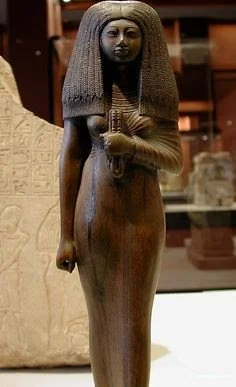
Her Tomb in the Valley of the Queens (QV80)
Queen Tuya’s resting place, designated as tomb QV80, lies within the historic Valley of the Queens on the west bank of Thebes. Commissioned by her son, the great Pharaoh Ramses II, this burial site stands as a testament to her esteemed position during Egypt’s New Kingdom era.
The layout of the tomb is relatively straightforward, comprising a short corridor that leads into a hall and an inner chamber where Tuya’s remains were once housed. Archaeological discoveries within the tomb revealed notable artifacts, including a canopic head (a lid crafted for safeguarding viscera), fragmented pieces of her sarcophagus, and several ushabti figurines—small statuettes designed to serve the queen in the afterlife.
However, the tomb’s decorative wall paintingslikely vibrant and intricate in their time—have suffered significant wear. This degradation is attributed to the tomb’s repeated use throughout history, which diminished its original splendor.
QV80 stands westward of another iconic burial site the famously ornate tomb of Queen Nefertari (QV66). Though less celebrated, Queen Tuya’s final resting place offers an intriguing glimpse into ancient Egyptian funerary practices and continues to hold historical significance within the sacred valley.

Statues and Artistic Objects
A black stone statue dating from the Amarna period (14th century BC) was reused and dedicated to Queen Tuya by her son Ramses II. It once stood in the Ramesseum (his mortuary temple) and is now on display at the Vatican Museums.
Among the rare pieces is a calcite canopic lid belonging to her, preserved in the Luxor Museum.
There are also official carved scenes representing her making offerings to Tia (Saqqara), where she wears royal and religious symbols such as the falcon-headed crown and the modius (platform of the diadem).
Who Was Queen Titi ?
Queen Titi was a prominent figure of the 20th Dynasty, known for her connections to Pharaoh Ramses III. She held multiple roles in relation to the pharaoh, being his wife, his sister, and possibly the mother of Ramses IV.
The complexities of these relationships, once debated, have been clarified through findings from 2010. These conclusions were drawn from documented confessions by tomb robbers, preserved in a papyrus known as Papyrus BM EA 10052.

Her Majestic Titles
Her tomb bears a comprehensive set of highly regal and religious titles, confirming her high status and position:
- King’s Great Wife
- Lady of the Two Lands
- King’s Daughter
- King’s Sister
- King’s Mother
- God’s Wife
- God’s Mother
Description of Tomb QV52
Its architectural layout resembles a Latin cross, consisting of an entrance that leads to a main corridor, a central hall, three adjoining side chambers, and a funerary chapel positioned at the center.
The walls of the tomb are richly adorned with scenes depicting Titi, shown offering adoration to various deities, most prominently Hathor in her representation as the “Cow of the West.”
A variety of gods and goddesses are featured throughout the artwork, including Ma’at, Thoth, Ra-Horakhty, Atum, the Four Sons of Horus—Imsety, Hapi, Duamutef, and Qebehsenuef—as well as Isis and Nephthys.
Other depictions include guardians of the afterlife with composite features resembling creatures such as dogs, serpents, and crocodiles. Protective deities and spirits also appear among the imagery, along with a remarkable scene where Titi is portrayed in the role of the priest Iunmutef.
The inner ceiling showcases a celestial design, decorated with white stars against a golden backdrop, amplifying its divine ambiance.
Unfortunately, the tomb has endured considerable damage over time due to its reuse during the Third Intermediate Period. During this phase, additional burials were introduced, and several objects were looted.

Representation and Interpretation of Teti
In some paintings, the queen is depicted as a very young woman, bearing the curls of her youth, leading some researchers to hypothesize that her death may have occurred before she reached her prime.
Other scenes depict her as a crowned woman, which may reflect different stages of her life or a dramatic symbolism linked to the rituals of loyalty to her in the afterlife.
Who Was Queen Nebettawy ?
whose name in ancient Egyptian translates to “Lady of the Two Lands” (nb.t-twy), was a daughter of King Ramses II and later became one of his Great Royal Wives. This title underscored her significant political and religious stature within the royal household
While her maternal lineage remains uncertain, some researchers propose that her mother may have been Queen Isetnofret I rather than the more widely recognized Queen Nefertari.
Artists at Abu Simbel prominently feature Nebettawy in royal depictions, showing her standing among her sisters in a procession of princesses. They portray her with a distinguishing crown featuring two tall plumes, symbolizing her elevated status and importance within the royal family.

Unveiling Inscriptions and Artistic Symbolism
As visitors step into the first hall, they see an awe-inspiring sight: 41 judges standing in solemn procession, each wearing a feather a symbol of truth and justice in ancient Egyptian lore.
. Among these figures, Nebettawy takes center stage, offering a statuette of Ma’at, the goddess embodying balance and order, to a seated figure crowned with two feathers. This powerful scene captures Nebettawy’s role in presenting herself to the divine tribunal, seeking acceptance into the afterlife.
Moving into the second hall, the narrative shifts to another striking depiction of Nebettawy. Here she faces Horus, the falcon-headed god representing kingship and protection.“Artists enrich the artistic details with her grand titles inscribed nearby: ‘Osiris,’ ‘King’s Daughter,’ ‘Great Royal Wife,’ ‘Lady of the Two Lands,’ and ‘Lady of the South and the North.'”
These titles not only highlight her prestigious status but also emphasize her role as a connection between Upper and Lower Egypt—a unifying figure deeply rooted in the cultural and spiritual richness of ancient Egyptian society.

Who Was Queen Meritamen ?
Meritamen, whose name translates to “Beloved of Amun” in ancient Egyptian (Mrjt Jmn), was a remarkable figure in Egypt’s royal lineage. She was the daughter of the illustrious Pharaoh Ramses II and his beloved Queen Nefertari, eventually rising to prominence as one of the kingdom’s influential Great Royal Wives.
Following her mother’s passing, Meritamen took on an esteemed position during her father’s reign, sharing the prestigious title of Great Royal Wife with her half-sister Bintanath. This elevated role signified not only her political importance but also her contributions to the royal family’s legacy.
Her presence is immortalized through inscriptions at the grand temples of Abu Simbel. These depictions showcase Meritamen in a ceremonial procession alongside other royal princesses, where she is notably placed fourth among Ramses II’s daughters, underscoring her significance in the pharaoh’s court.

Her Titles and Religious Significance
She held a multitude of prestigious titles that underscored her elevated status: King’s Daughter, Great Royal Wife, Lady of the Two Lands, Lady of Upper and Lower Egypt, Mistress of the Harem of Amun-Re, as well as priestess and singer devoted to various deities, including Hathor, Mut, and Atum.
These distinguished titles highlight her prominent role not just within the royal court but also in religious life. She actively participated in the royal cult and played a vital part in overseeing sacred rituals and spiritual affairs, solidifying her influence in both realms of power and worship.

Her Tomb QV68 in the Valley of the Queens
Nestled within the renowned Valley of the Queens lies Meritamen’s exquisite tomb, identified as QV68. Located amidst the prominent final resting places of figures like Nefertari (QV66) and Bintanath (QV71), Meritamen’s burial site stands as a testament to her royal stature and historical legacy.
The architectural layout of Meritamen’s tomb mirrors the typical designs found in this celebrated necropolis. It features a grand main hall, adjoining side chambers, a funerary hall, and distinctive “magical niches” thoughtfully integrated into the central room. Each area seems meticulously designed to honor both spiritual beliefs and the deceased’s royal identity.
What remains of the tomb’s decorations reveals captivating religious imagery. Among these, Meritamen is depicted presenting Mehet boxes—symbolizing offerings or clothing—and standing before the revered deities Hathor and Osiris. Other symbolic scenes portray gifts to Khnum and Ptah, enriching the spiritual significance of her burial chamber.
A highlight of the tomb’s treasures is its red granite sarcophagus, now housed in the Berlin Museum (inventory no. 15274). Inscribed with Meritamen’s eternal titles, it reads: “The Osiris, King’s Daughter, beloved of him, Great Royal Wife, Lady of the Two Lands, Meritamen, justified,” encapsulating her noble legacy for generations to ponder.
Documented initially during the 19th century by famed explorers and scholars such as Hayproff, Champollion, and Lepsius, Meritamen’s burial site later underwent cleaning and detailed study by Franco-Egyptian missions organized by the CNRS, SCA, and GCI. Despite enduring erosion and repurposing over time, the tomb still retains fragments of its original splendor, particularly within its upper chambers.
Though time has weathered much of this magnificent resting place, Meritamen’s tomb continues to offer invaluable insights into ancient Egyptian artistry, beliefs, and rituals. It stands as both a historical treasure and a poignant reminder of her royal presence in Egyptian history.

Who Was Queen Bintanath ?
Identity and Origin
Bintanath (or Bentanat) was the eldest daughter of King Ramses II and Great Royal Wife Isetnofret I.
Her name means “Daughter of the goddess Anat,” a divinity originating from the Canaanite region, which reflects both regional connections and the openness of ancient Egypt to its surrounding world.
Her Titles and Rank in the Royal Court
Bintanath held an array of esteemed titles that underscored her prominence within the royal hierarchy. These included Great Royal Wife, Lady of the Two Lands, Hereditary Princess, King’s Sister, and Priestess of Hathor. She also carried influential religious designations, such as Great of Praises and Great of the Hetes Scepter, which emphasized her spiritual and ceremonial significance.
Her stature within the royal court ascended notably following the passing of her mother. This pivotal moment saw Bintanath elevated to the prestigious position of Great Royal Wife during the reign of Ramses II, solidifying her influence and central role in maintaining royal traditions.

Overview of Queen Bent Anath Life
Bintanath stands out as one of the most distinguished princesses during her father’s commemorative ceremonies, where she played a notable role in the procession of princesses at the temples of Luxor and Abu Simbel.
Historical records confirm that Bintanath outlived her father and passed away during the reign of her brother, King Merenptah. She was interred in Tomb QV71, situated in the Valley of the Queens.
Tomb QV71 – A Resting Place in the Valley of the Queens
Tomb QV71, Bintanath’s final resting place, was recognized as early as the era of Champollion and Lepsius and later subjected to formal excavation by Ernesto Schiaparelli.
The tomb’s design consists of a corridor leading into a main hall, a burial chamber, and adjacent side rooms, with its ceiling decorated with motifs of stars. The walls are covered with religious imagery portraying Bintanath before various deities, including Ptah-Sokar, Horus, Anubis, Shu, and Hathor. Additional depictions feature figures such as Nun, Geb, Ra, Thoth, and Nephthys, enriching the tomb’s cultural and spiritual significance.

The Sarcophagus and Funerary Inscriptions
A fascinating relic from the depths of ancient history, the sarcophagus and its intricately adorned lid were unearthed within the confines of an Egyptian tomb. These treasured artifacts now reside in the Egyptian Museum in Cairo under the catalog number JdE 47370, continuing to captivate historians and visitors alike.
What truly sets this sarcophagus apart is its collection of inscriptions, which evoke a sense of reverence and spiritual devotion. Among these engravings is a heartfelt prayer dedicated to the goddess Nut, a deity revered for her nurturing and protective nature. The inscriptions also describe her with profound titles, including “The Merciful, First of the Beloved” and “Royal Wife and King’s Daughter,” emphasizing her esteemed role in both divine and royal spheres.

Who is Queen Henutmire, also known as Henutmire-Ra
Queen Henutmire, often referred to as Henutmire-Ra, was a prominent figure of ancient Egypt’s 19th Dynasty. As the daughter of King Seti I and Queen Tuya, she was the sister of King Ramses II, whom she later married. This union elevated her status to one of Ramses II’s Great Royal Wives, making her one of eight queens in his royal household.

Tomb Of Queen Henutmire QV75 in the Valley of the Queens
Nestled within the storied Valley of the Queens, a serene burial ground for the royal queens and princesses of ancient Egypt, lies her tomb, formally known as QV75. Unearthed in the 19th century, this remarkable site stands as one of the oldest within this sacred enclave, offering a glimpse into an era rich with history and devotion.
This tomb unveils a thoughtfully crafted design, featuring an outer hall that draws visitors into its depths, a corridor gently guiding the way, and a funerary chamber where the essence of eternal rest is encapsulated. Every inch of its walls is adorned with intricate religious imagery, showcasing scenes of the queen in divine communion with powerful deities like Ra-Horakhty and Anubis. These artistic narratives speak volumes about her elevated status and the profound spiritual beliefs of her time, weaving together history and reverence in one awe-inspiring masterpiece.
Inscriptions and Artifacts:
Within the walls of her tomb, captivating inscriptions depict Henutmire-Ra presenting offerings to the gods, a poignant representation of her deep spiritual devotion and prominent societal role. These intricate carvings provide a window into her life, revealing how she balanced religious duties with her revered status.
One of the most fascinating artifacts connected to her legacy is her sarcophagus. Though originally crafted to honor her, it later served as the final resting place for the royal priest Harsiesi, housed in Medinet Habu. Today, this remarkable relic is safely displayed in the Egyptian Museum in Cairo, allowing modern visitors a chance to glimpse history preserved.

Whos is Queen Sat-Re, also known as Setri ?
held a significant role in the history of ancient Egypt’s illustrious 19th Dynasty. As the esteemed wife of King Ramses I, she occupied a central position in the royal lineage that shaped this powerful era. Her influence extended through generations, being the mother of King Seti I and the grandmother of the legendary King Ramses II, one of Egypt’s most celebrated pharaohs. “Sat-Re firmly interwove her legacy with the dynasty’s remarkable leadership, leaving an enduring mark on Egyptian civilization.
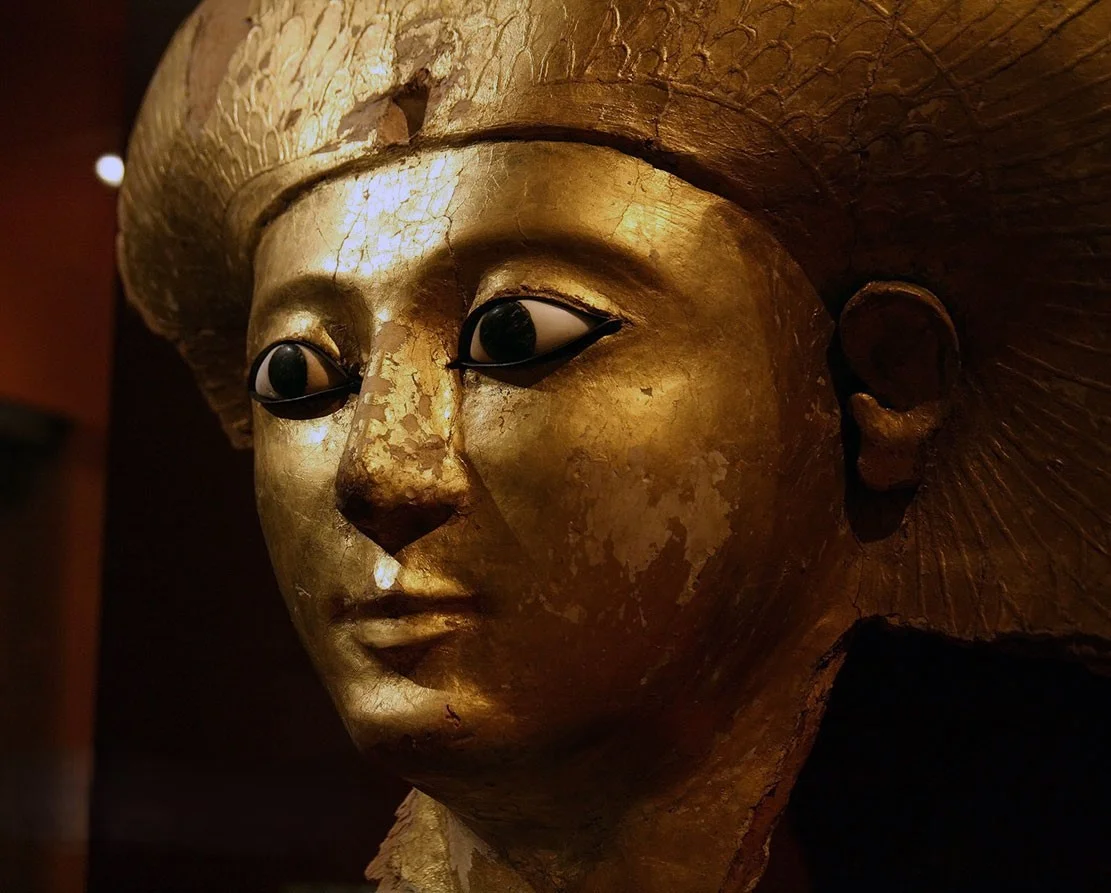
Her Tomb QV38 in the Valley of the Queens:
The tomb of Queen Sat-Re, marked as QV38, stands in the Valley of the Queens. Scholars believe it represents the earliest tomb in this area explicitly dedicated to a queen of the 19th Dynasty.
Although artists left the decorative work unfinished, the existing inscriptions depict Queen Sat-Re presenting offerings to gods such as Isis, Nephthys, and Anubis. These details underscore her significant religious and societal contributions.
Title and Status
The inscriptions at the temple of King Seti I in Abydos highlight Queen Sat-Re as the “Mother of the King,” underscoring her role as the mother of Seti I. Additionally, certain texts refer to her with the title “Great Royal Wife,” reflecting her position as the consort of King Ramses I.
Debating the Mystery of Her Identity
The identity of King Ramses I’s wife and King Seti I’s mother has sparked intriguing debates among historians and Egyptologists. While many sources assert that Queen Tia held these titles, some suggest she might be the same individual as Queen Sat-Re. This theory gains traction through the discovery of a daughter of Ramses II named “Tia-Sat-Re,” a name that intriguingly combines both Queen Tia and Queen Sat-Re’s identities. Such evidence adds weight to the possibility that these two figures from ancient history are, in fact, one and the same.
Wh is Queen Duatenupt (or Tentoupt)
Queen Duatenupt, also referred to as Tentoupt, was a significant yet lesser-known figure in ancient Egyptian history. As the queen of the 20th Dynasty, she was the wife of King Ramses IV and the mother of King Ramses V. Historical sources suggest that her full name might have been Duatenupt or Tentoupt, though records are sparse and interpretations vary.
Her royal burial took place in tomb QV74, located in the Valley of the Queens—a site dedicated to the final resting places of queens and noblewomen. Despite its royal association, her tomb remains one of the less prominent discoveries from this era, drawing relatively little attention compared to the grandeur of other historical sites. This mystery surrounding her life and burial adds an intriguing layer to her legacy, inviting modern scholars to delve deeper into the lives of Egypt’s queens beyond the more celebrated royal figures.
Tomb QV74 in the Valley of the Queens
The tomb of Queen Duatenupt, located in the Valley of the Queens and known as QV74, originally served as a burial site for a princess of the 19th Dynasty, but later the Egyptians used it for Queen Duatenupt.
The decorations and inscriptions inside the tomb show the queen making offerings to the deities, highlighting her religious and social role. Among the divinities represented in the scenes are Ra-Horakhty, Anubis, and Isis.
Title and Status
Queen Duatenupt’s tomb inscriptions paint a vivid picture of her esteemed position in ancient Egypt’s royal hierarchy. Honored with the titles “Great Royal Wife” and “Mother of the King,” her status as both. لإhe consort of King Ramses IV and the mother of King Ramses V is unmistakably affirmed. These designations not only underscore her significance within the royal family but also reflect the pivotal role she played in the political and ceremonial life of the court.
Debate Surrounding Her Identity:
Scholars have long debated the identity of the wife of King Ramses IV and the mother of King Ramses V. Certain accounts suggest Queen Tentoupt. Often referred to as Ramses IV’s wife, could potentially be the same figure as Queen Duatenupt.
The presence of a daughter of Ramses II named ‘Tia-Sat-Re’ supports the theory, suggesting that Tentoupt and Duatenupt might have been the same individual.
The Princes in the Valley of the Queens
Prince Amen-Herkhebshef, also known as Amon-Her-Khebchefshef
Amen-Herkhebshef was one of the sons of King Ramses III of the 20th Dynasty. His tomb, QV55, located in the Valley of the Queens at Luxor, is one of the most remarkable royal burials of this period.

Exploring the Tomb of Prince Amen-Herkhebshef (QV55)
Nestled within the historically rich Valley of the Queens, the tomb of Prince Amen-Herkhebshef serves as a remarkable testament to the burial traditions of Egypt’s royal family during the 20th Dynasty. This sacred resting place offers a captivating glimpse into ancient architecture and royal heritage.
One of its most striking features is its structural design, characterized by a long vestibule that leads visitors to a beautifully adorned funerary chamber. The walls of the tomb come alive with inscriptions. Vividly depicting King Ramses III presenting his beloved son to the divine figures. These illustrations not only underscore the prince’s significance but also celebrate the profound connection between father and son a relationship honored among gods and forever etched into eternity.

The Titles of the Prince
Prince Amen-Herkhebshef held several royal titles, including:
- “King’s Son”
- “Heir to the Throne”
- “Commander of the Chariot”
These titles emphasize his high rank at the royal court and indicate his potential role as successor to the throne.
Importance of the Tomb
Amen-Herkhebshef’s tomb stands out as one of the most significant royal burial sites in the Valley of the Queens. It offers a profound glimpse into the artistic and spiritual aspects of King Ramses III’s era. The intricate inscriptions and elaborate decorations within the tomb rank among the most exquisite specimens of ancient Egyptian artistry, shedding light on the religious beliefs and funerary practices of the period.
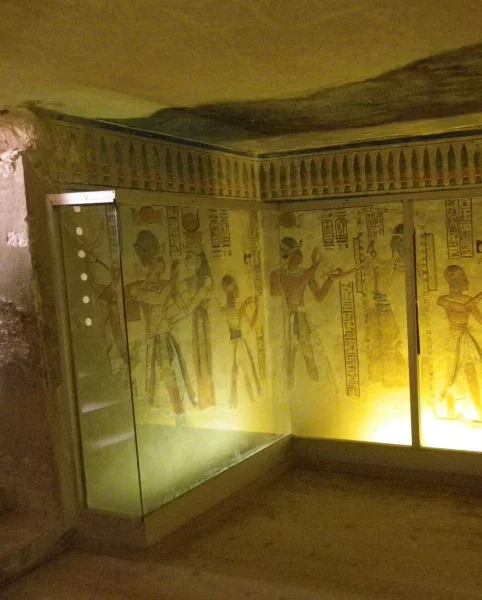
Prince Khâ-em-Waset (QV44) – son of Ramses III.
The sons of Ramses II (QV40, QV72, QV82) – collective or individual tombs intended for the royal children.
Prince Imhotep (or Imhotepe) – Tomb QV46
Prince Imhotep, buried in tomb QV46 in the Valley of the Queens, was one of the high officials during the reign of King Thutmose I. He should not be confused with the famous Imhotep of the 3rd Dynasty.
🏛️ Tomb QV46
The Italian archaeologist Ernesto Schiaparelli discovered the tomb between 1903 and 1905. It consists of a shallow shaft leading to a small funerary chamber. Archaeologists found the mummified remains of Imhotep, accompanied by funerary furniture such as fragments of a sarcophagus, a canopic jar, an alabaster plaque, and wooden chests containing mummified ducks. They now display these objects at the Egyptian Museum of Turin.
Identity of Imhotep
Imhotep held several important positions at the royal court:
- Vizier
- Governor of Thebes
- Judge
- Master of the Royal Children
These offices reflect his high rank in the administration and religious system of ancient Egypt.
Importance of the Tomb
Tomb QV46 is one of the rare burials that provides direct insight into the life of high officials under Thutmose I. Although its design is simple compared to royal tombs, it illustrates the significant role played by Imhotep in the governance of the state.

Archaeological Advancements and Restoration Efforts in the Enigmatic Valley of the Queens
The Valley of the Queens has long held fascination as a treasure trove of ancient history. In modern times its mysteries have been further unraveled thanks to extensive archaeological endeavors. One notable mission, led by Italian archaeologist Ernesto Schiaparelli between 1903 and 1905, made headlines with the discovery of Queen Nefertari’s stunning tomb a landmark moment that deepened our understanding of Egypt’s royal legacy.
Building on these pioneering efforts, the Egyptian Ministry of Tourism and Antiquities joined forces with global institutions like the American Research Center in Egypt (ARCE) and the Getty Foundation to safeguard this historic site. Among their most impressive projects is the meticulous restoration of Nefertari’s tomb, which had suffered from color deterioration over time. After years of careful preservation work, archaeologists finally reopened the tomb to visitors, allowing them a rare glimpse into the intricate artistry that once adorned the resting place of this revered queen.
In present-day Luxor, the Valley of the Queens stands as an essential destination for travelers eager to connect with Egypt’s storied past. To ensure the long-term protection of its precious tombs, only a select number are accessible to the public, with viewing schedules rotated periodically. This thoughtful balance helps preserve the artistry and ancient heritage for future generations to marvel

What Makes It So Unique ?
The Valley of the Queens, unlike the Valley of the Kings. Was not exclusively dedicated to queens. It also served as the resting place for royal family members, including princes and princesses.
Renowned for its vibrant and intricate designs. The tombs here stand out for their striking use of color. And detailed inscriptions, with Nefertari’s tomb recognized as a timeless masterpiece.
This site reflects the significant religious and political roles that queens held in ancient Egypt, underscoring their esteemed position in society.

Conclusion
The Valley of the Queens in Luxor stands as more than just a royal burial site, it embodies the significance, of women in ancient Egyptian society, these women were vital as queens, mothers shaping the future of The dynasty. And influential figures in both religious and political spheres, From the breathtaking tomb of Queen Nefertari to the resting places of Ramses II’s sons, this valley serves as a testament to ancient Egypt’s unwavering commitment to the afterlife and its profound faith in eternal existence. Nestled within its quiet, majestic hills, the vivid hues of history still echo with timeless brilliance.
Frequently Asked Questions About The Valley of the Queens
The Eternal Resting Place of Egypt’s Royal Women
What is the Valley of the Queens?
The Valley of the Queens (Arabic: وادي الملكات, Wadi al-Malikat) is a burial site on the West Bank of Luxor, dedicated primarily to the queens, princesses, and princes of the 19th and 20th Dynasties of ancient Egypt.
Lying in a secluded side valley near the Valley of the Kings, it served as the final resting place for the royal family members who were not pharaohs. It is renowned for its beautifully decorated tombs, especially that of Queen Nefertari — often called the “Sistine Chapel of Ancient Egypt.”
Why was a separate valley built for queens?
While pharaohs were buried in the Valley of the Kings, the royal family needed a dignified yet separate resting place. The Valley of the Queens provided a sacred, secluded location for queens, their children, and other high-ranking women.
This separation maintained the pharaoh’s unique status while honoring the vital roles of royal women in lineage, religion, and court life.
Where is the Valley of the Queens located?
The Valley of the Queens is located in **Thebes (modern-day Luxor)**, on the **West Bank of the Nile**, about 1.5 km west of the Temple of Hatshepsut at Deir el-Bahari.
It lies in a narrow, dry valley surrounded by limestone cliffs, offering natural protection and a serene atmosphere ideal for eternal rest.
When was the Valley of the Queens used?
The valley was primarily used during the **New Kingdom**, especially the 19th and 20th Dynasties (c. 1292–1070 BCE).
It was established by **Ramesses I** and expanded by his successors, including **Seti I**, **Ramesses II**, and **Ramesses III**. Over 90 tombs have been discovered, though only a few are open to the public.
What is the most famous tomb in the Valley of the Queens?
The most famous tomb is QV66 — the tomb of Queen Nefertari, the beloved wife of Ramesses II.
Often called the “Sistine Chapel of Ancient Egypt”, its walls are covered with breathtaking, vividly colored paintings depicting Nefertari’s journey through the afterlife, guided by gods like Osiris, Isis, and Hathor.
Despite its small size, it is one of the most exquisitely decorated tombs in Egypt.
Who else is buried in the Valley of the Queens?
Over 70 royal women and children were buried here, including:
- Nefertari: Chief wife of Ramesses II.
- Henuttawy: Daughter of Ramesses III, a princess and priestess.
- Princesses and princes: Children of Ramesses III, IV, and VI.
- Isimkheb: A royal daughter and “God’s Wife of Amun.”
- Tiye (wife of Amenhotep III): Though her tomb is unfinished, she is among the royal women associated with the site.
What do the tomb paintings depict?
The walls of the tombs are filled with religious scenes from the afterlife, including:
- The Book of the Dead: Spells to guide the soul through the underworld.
- Meeting the gods: Osiris (judge of the dead), Anubis (embalmer), and Hathor (nurturer).
- The Weighing of the Heart: Where the heart is weighed against the feather of Ma’at (truth).
- Protective symbols: The Eye of Horus, scarabs, and ankhs.
These images were not just art — they were magical tools to ensure eternal life.
Why are the queens shown with crowns and regalia?
Even in death, queens were depicted with full royal titles and symbols of power — crowns, scepters, and divine emblems — to affirm their status and divine favor.
The cobra (uraeus) on the brow, for example, symbolized protection and royal authority. These depictions ensured their identity and power would endure in the afterlife.
Why is Nefertari’s tomb so special?
Queen Nefertari was Ramesses II’s favorite wife, and he spared no expense on her tomb. The paintings are:
- Vividly colored: Using pigments that have survived for over 3,000 years.
- Exquisitely detailed: Every feather, jewel, and expression is rendered with precision.
- Religiously rich: Depicting her as a goddess, welcomed by deities.
After decades of restoration by the Getty Conservation Institute, it was reopened to limited visitors — only 150 people per day to preserve its fragile art.
Can I visit Nefertari’s tomb?
Yes, but access is **strictly limited** to protect the delicate paintings. You must purchase a **separate, expensive ticket** (currently around 1,000 EGP) to enter QV66.
Only a small number of visitors are allowed each day, and photography is **not permitted** inside the tomb.
If you can’t enter, a full-scale replica of the tomb is displayed at the Grand Egyptian Museum (GEM) in Giza.
What threats face the Valley of the Queens?
The site faces several risks:
- Water damage: Flash floods can flood tombs and damage paintings.
- Humidity and salt: From visitors’ breath, causing paint to flake.
- Previous restoration damage: Early 20th-century work sometimes used harmful materials.
- Tourism pressure: High foot traffic requires careful management.
Ongoing conservation projects aim to stabilize the tombs and preserve their art for future generations.
How to visit the Valley of the Queens?
The Valley of the Queens is part of the **West Bank Luxor ticket system**. You can visit with a combined ticket that includes:
- Valley of the Kings
- Temple of Hatshepsut
- Colossi of Memnon
- Medinet Habu
The ticket is valid for five days. Nefertari’s tomb requires a separate ticket.
What should I know before visiting?
- Visit early: To avoid heat and crowds.
- Wear comfortable shoes: The site involves walking on sand and stone.
- Bring water and sunscreen: There is little shade.
- Respect the art: Do not touch walls or take photos where prohibited.
- Hire a guide: To understand the symbolism and stories behind the paintings.
What was the spiritual role of royal women?
Royal women were not just wives and mothers — they held deep spiritual significance:
- God’s Wife of Amun: A high priestess role that gave women immense religious power.
- Divine birth: Queens were believed to be impregnated by gods (e.g., Amun).
- Protectors of Ma’at: They upheld truth, balance, and cosmic order.
Their tombs reflect this sacred status — they were not just buried, but deified.


